What You Are Seeing
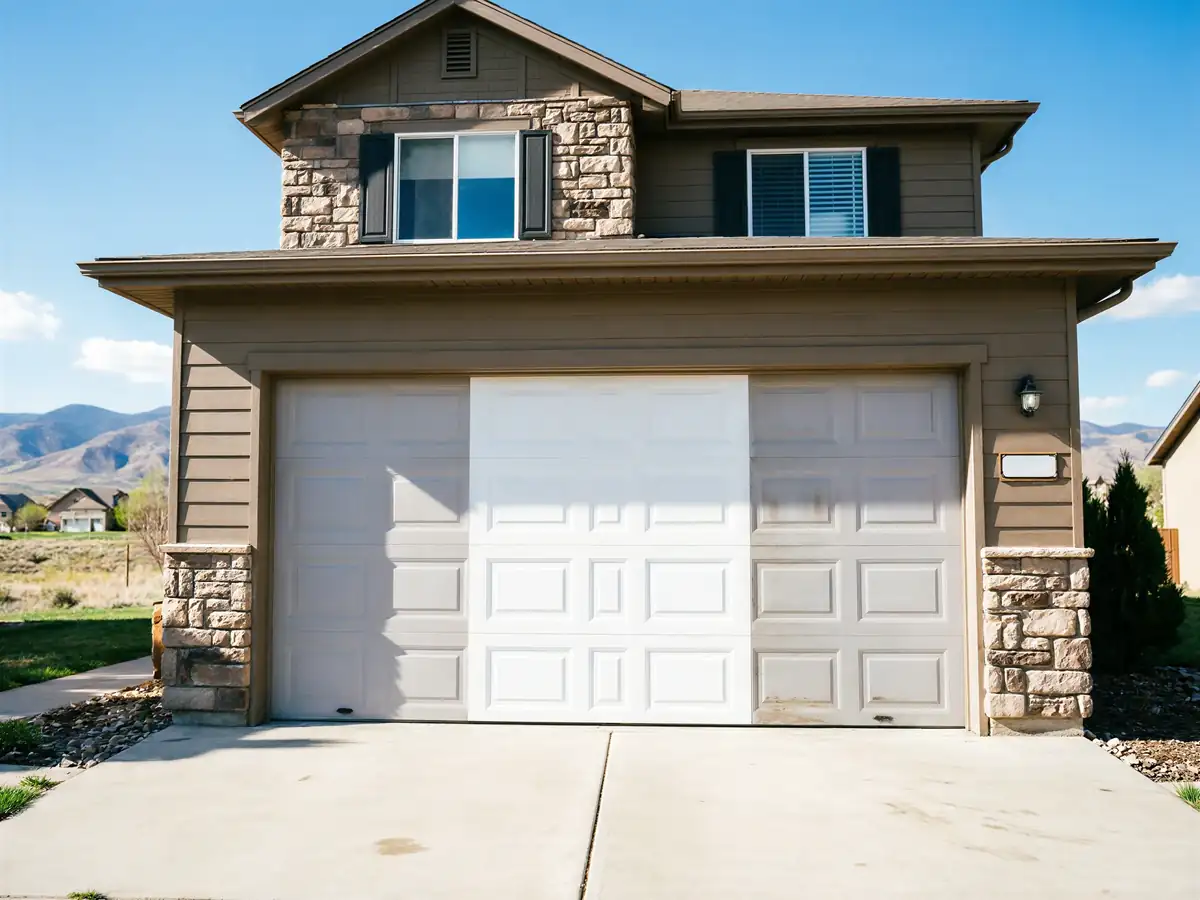
A bowed or cracked panel usually shows up one of two ways
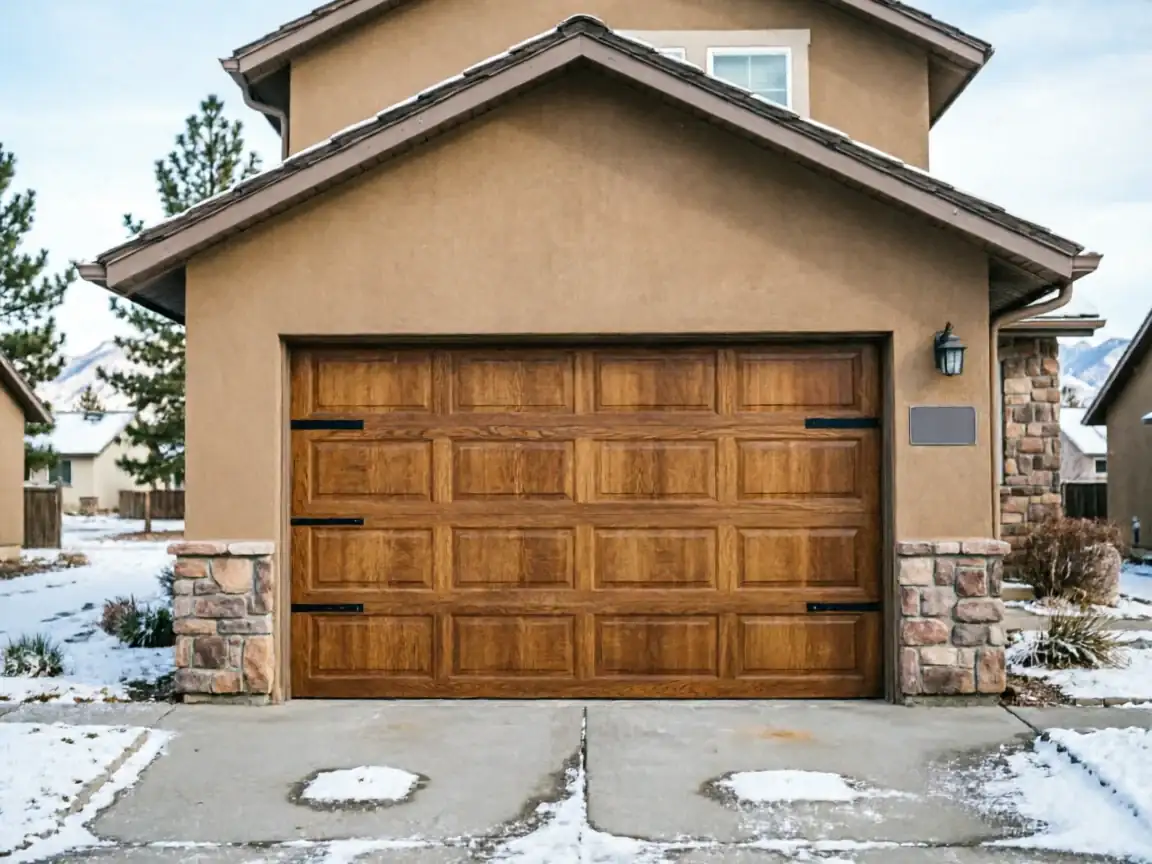
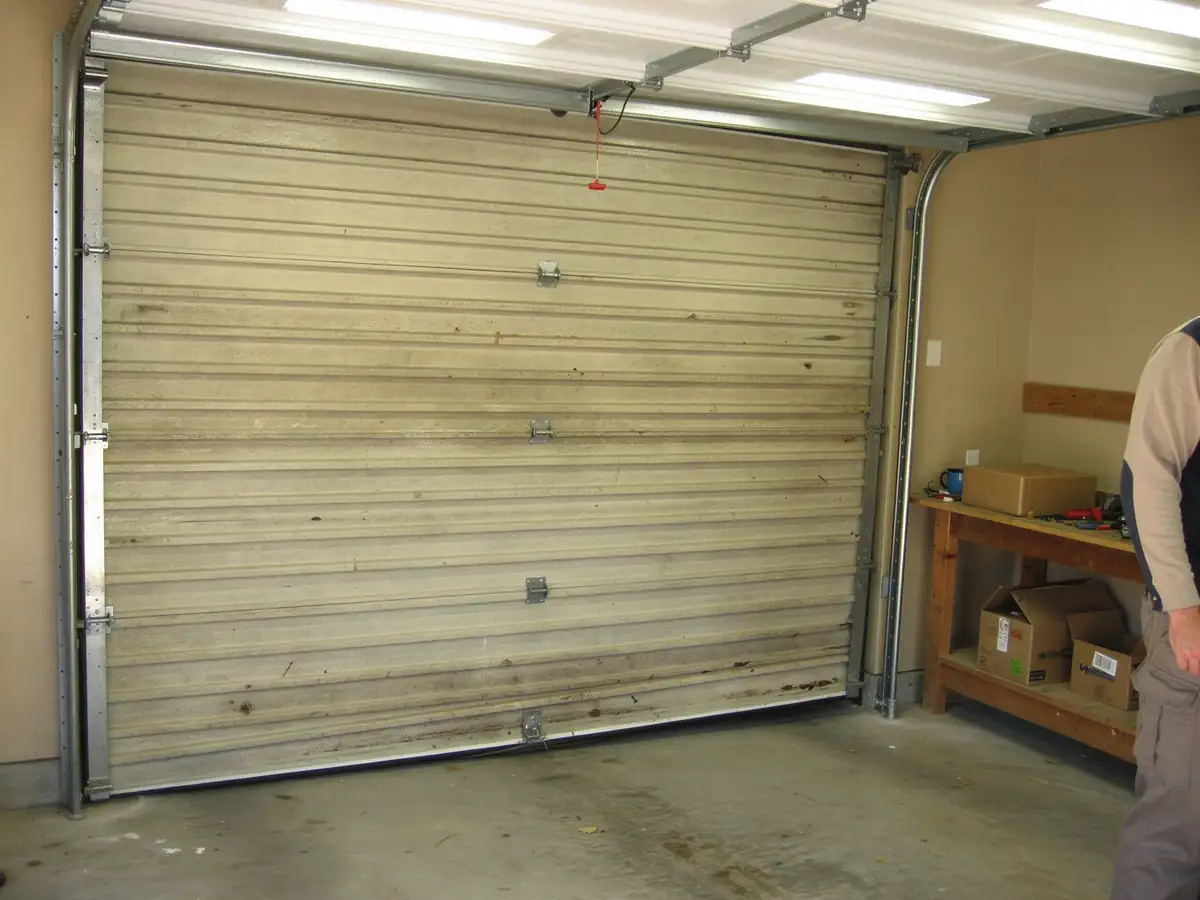
A dent from a car bumper or a basketball, or a long crack running along a seam where the steel has fatigued. On older doors you'll also see rust blooming at the bottom panel first, since that's the section closest to the slab and the one that takes the most moisture and road salt over a winter.
Sometimes it's just cosmetic
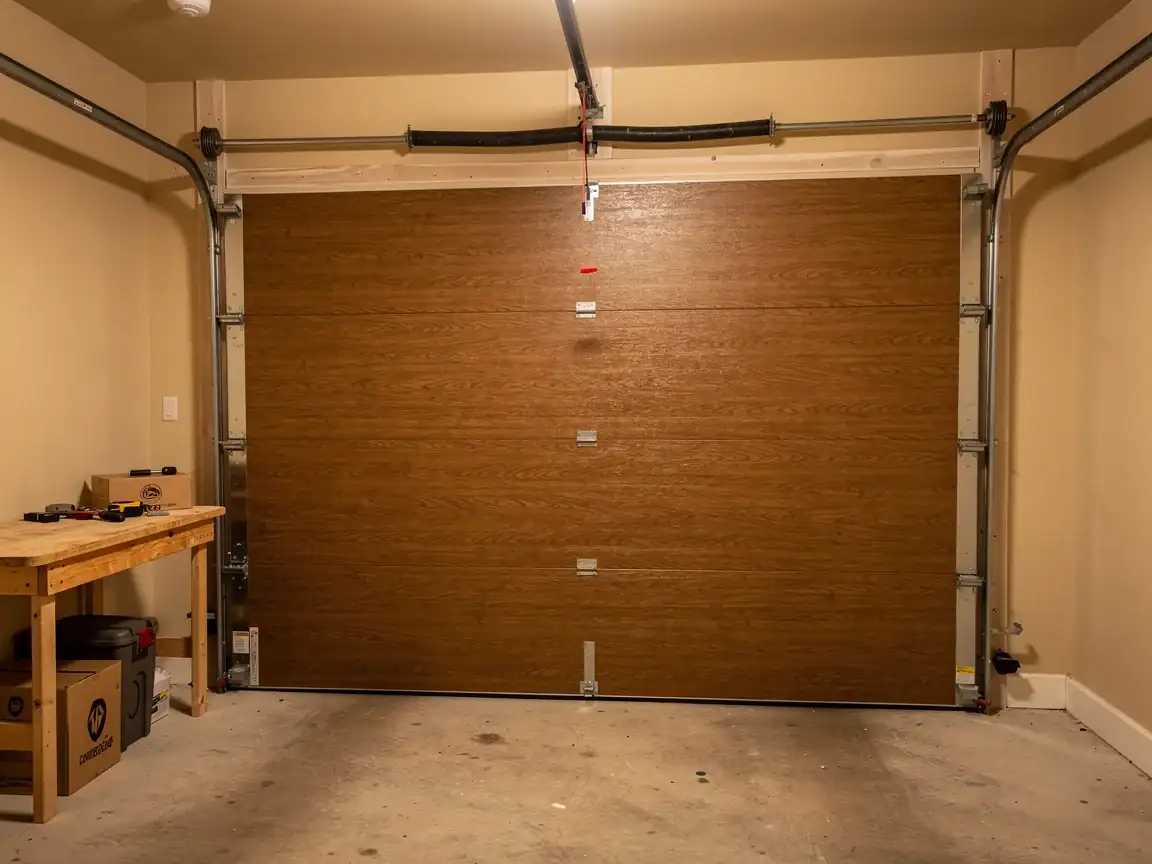
The door still opens and closes fine, the track is straight, and only the skin is damaged. Other times the dent has pushed the panel out of its track channel, which puts strain on the rollers and the opener every time the door cycles. If the door is binding, scraping, or the opener strains harder than it used to on a damaged panel, that's not just appearance anymore - it's a mechanical problem.
We also see panels that have simply dried out and gone brittle
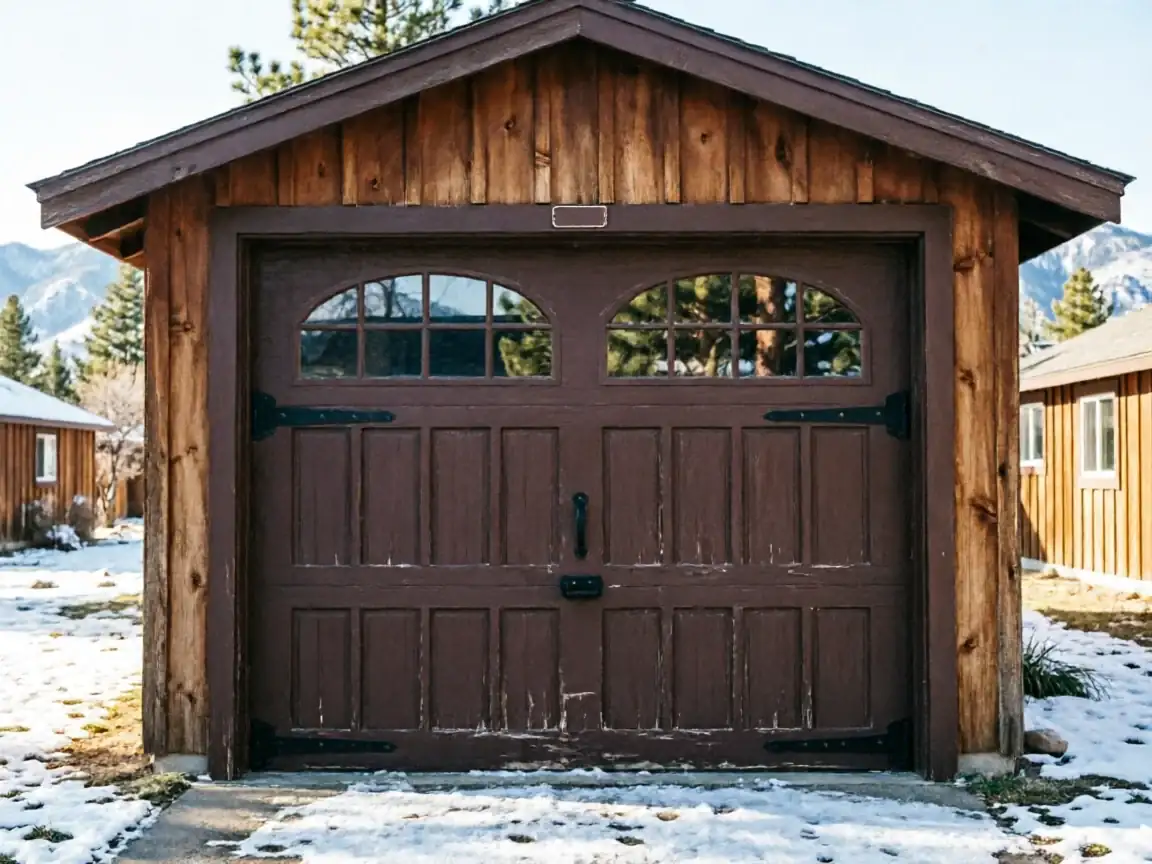
Wood composite panels from the 1960s-70s era crack along the grain rather than denting, and once one section splits, the whole run of panels on that door tends to be the same age and the same risk.
What Causes It Around Here
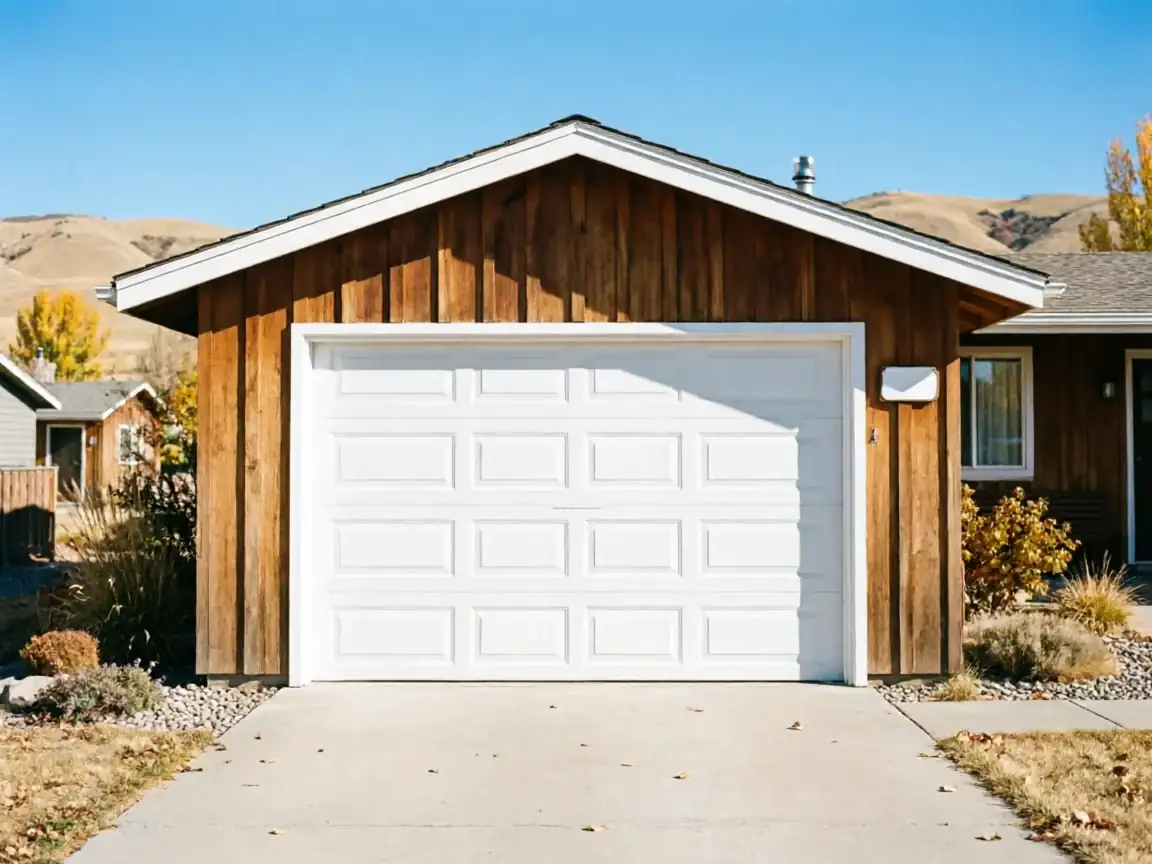
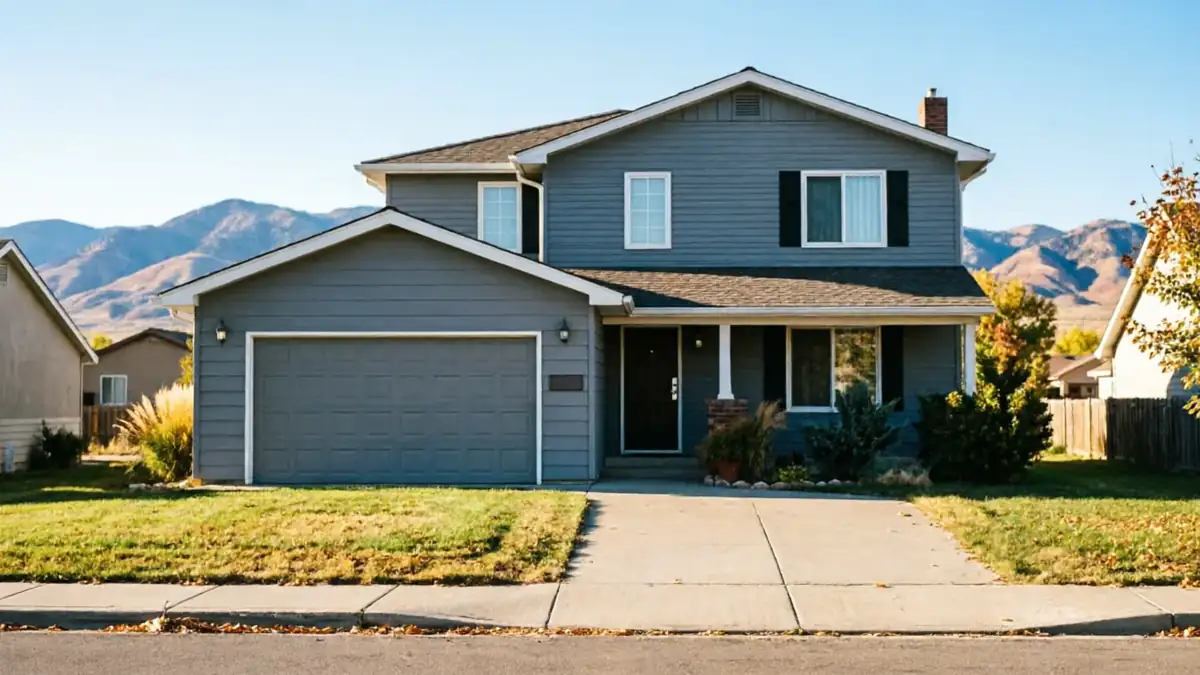
Housing across Moses Lake and the surrounding four areas was mostly built between 1958 and 1987, with a lot of it dating to the 1960s and 70s. Garage doors from that era were steel or wood composite, built before the thicker-gauge, insulated panel designs became standard. Forty-plus years in, the steel has usually thinned from corrosion and the wood composite has dried and lost flexibility.
The climate here doesn't help. This is a cold, severe-winter climate band, which means repeated freeze-thaw cycling on the panel seams every year. Water gets into a hairline crack in the fall, freezes and expands over the winter, and by spring the crack has grown. Repeat that for a few decades on a door that's original to a house built in 1969 and you get exactly the brittle, cracked, or buckled panels we're called out for.
Newer doors in the area, including replacements installed in the last decade or two, don't show this pattern nearly as often - it's specific to the original housing-stock doors still in service.
Parts We Carry
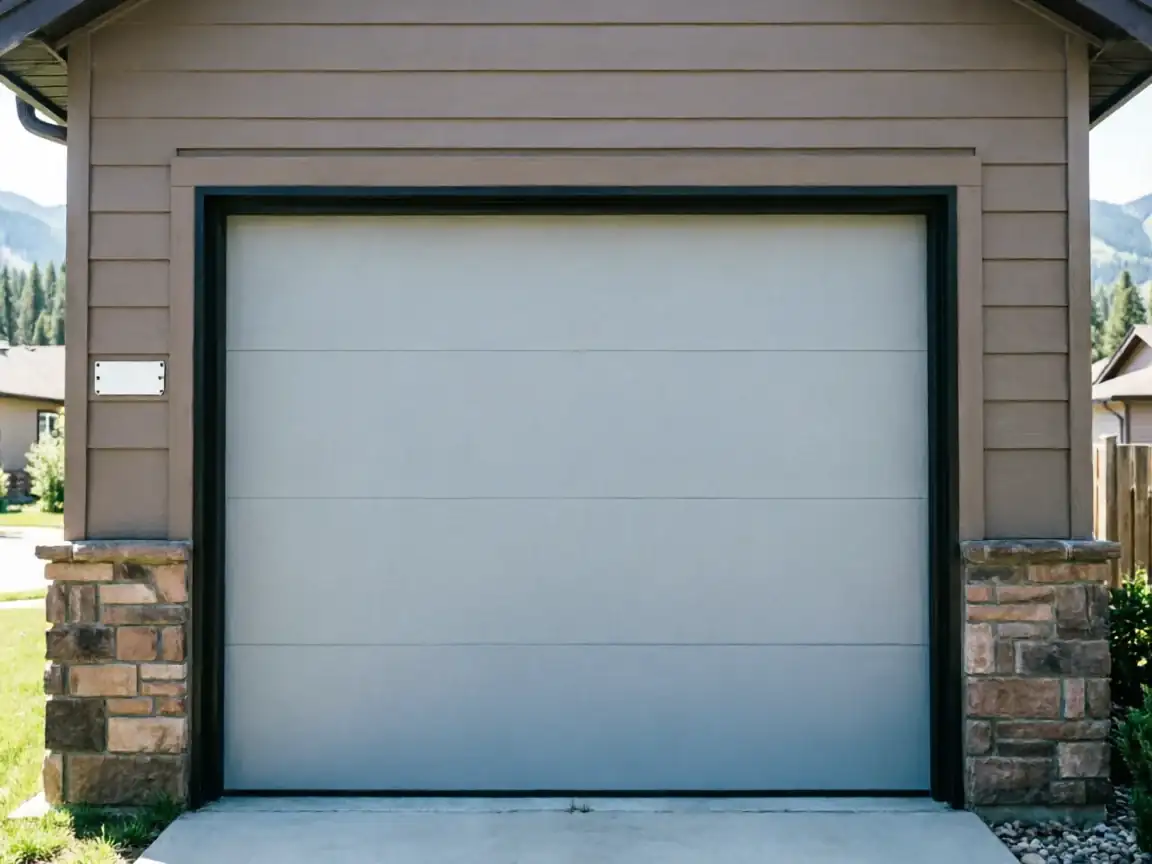
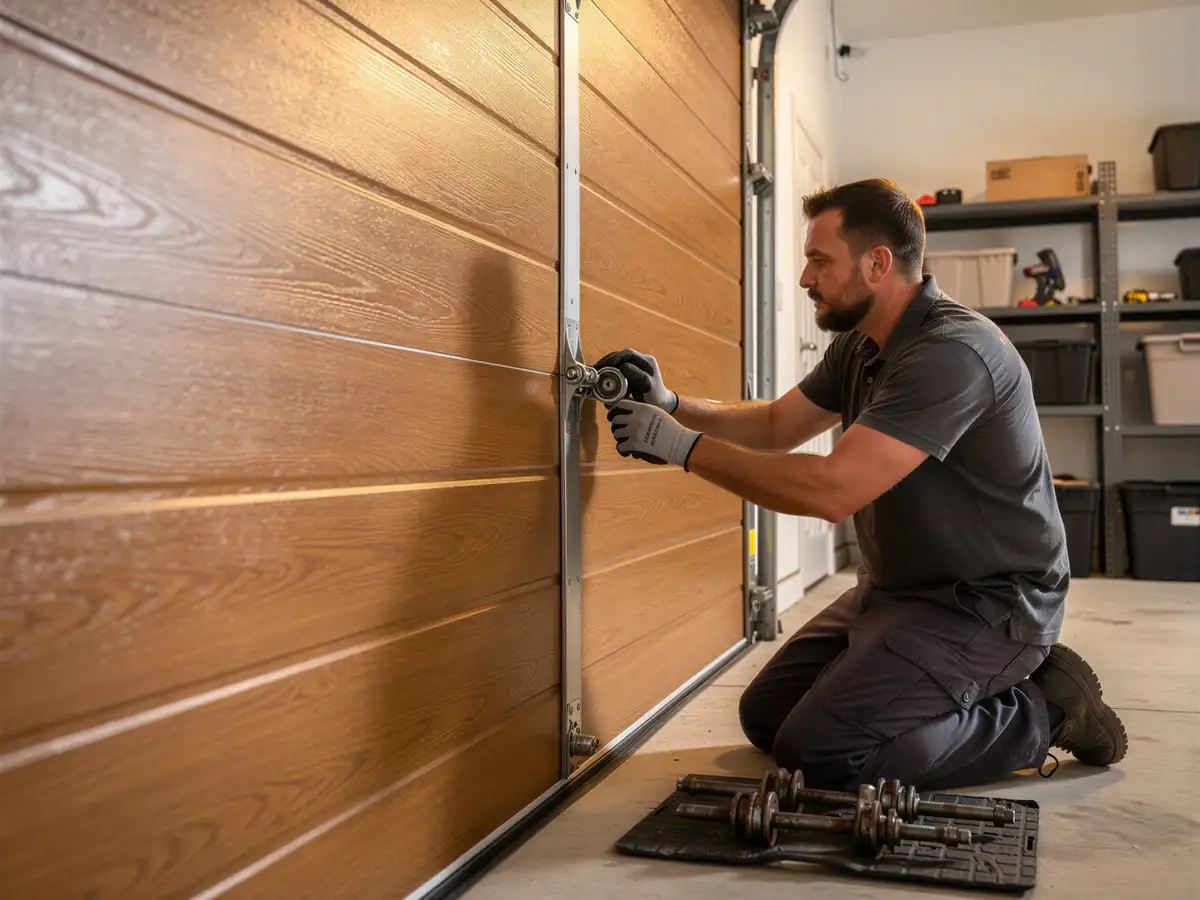
We stock replacement panels sized to fit the common door widths found on houses from the 1958-1987 build era across this service area, in both steel and composite, so a single damaged section can usually be swapped without replacing the whole door. We also carry the hinges, end stiles, and seam hardware that connect panels together, since a cracked panel often takes a hinge or stile with it.
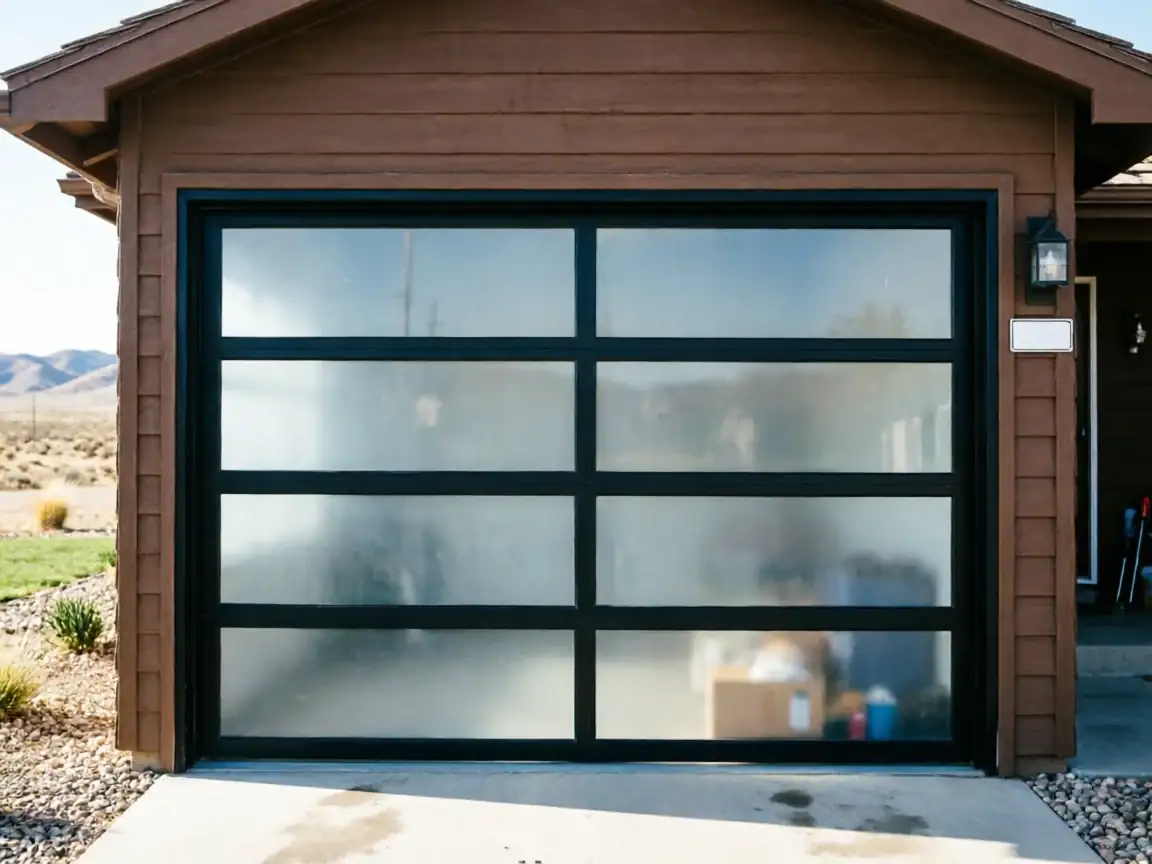
What we don't always have on the truck is an exact color or panel-window match for a door that's 40-50 years old - some of those production runs are long discontinued. In that case we'll match as close as we can, or talk through whether a full door replacement makes more sense than a visibly mismatched patch. That's the one real limitation here: we can fix the mechanical problem fast, but a perfect cosmetic match on an older door isn't always possible.
What You Pay
What a panel replacement runs depends on a few things we check on site
How many panels are damaged, whether it's steel or wood composite, whether the track or rollers took damage along with the panel, and whether we can find a close match in stock or need to order one in. A single dented panel on an otherwise sound door is a smaller job than a cracked bottom section that's also bent the track.
We'll look at the door, tell you straight whether a panel swap makes sense or whether the door's age and condition mean a full replacement is the better value
And give you a number before we start work. We're not going to guess a figure here without seeing the door - on a door built decades ago, condition varies panel to panel and house to house even within the same neighborhood.