The Situation
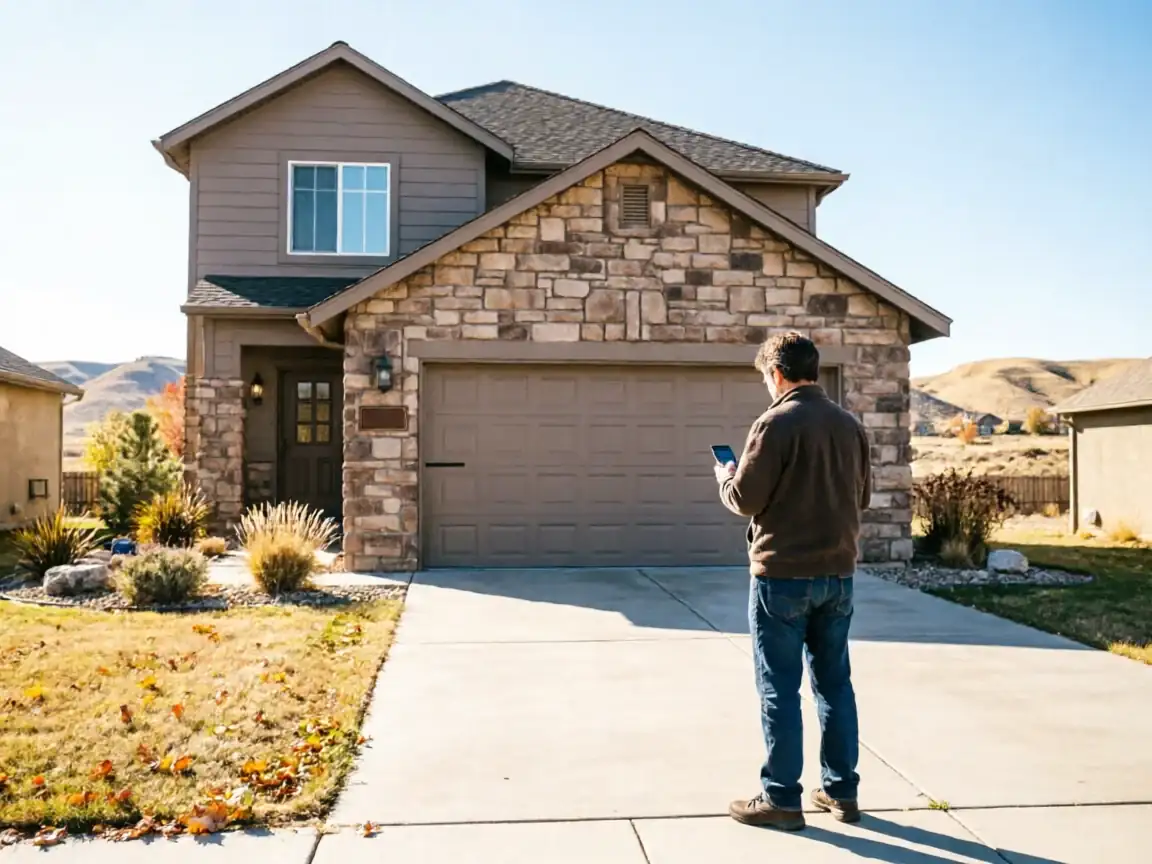
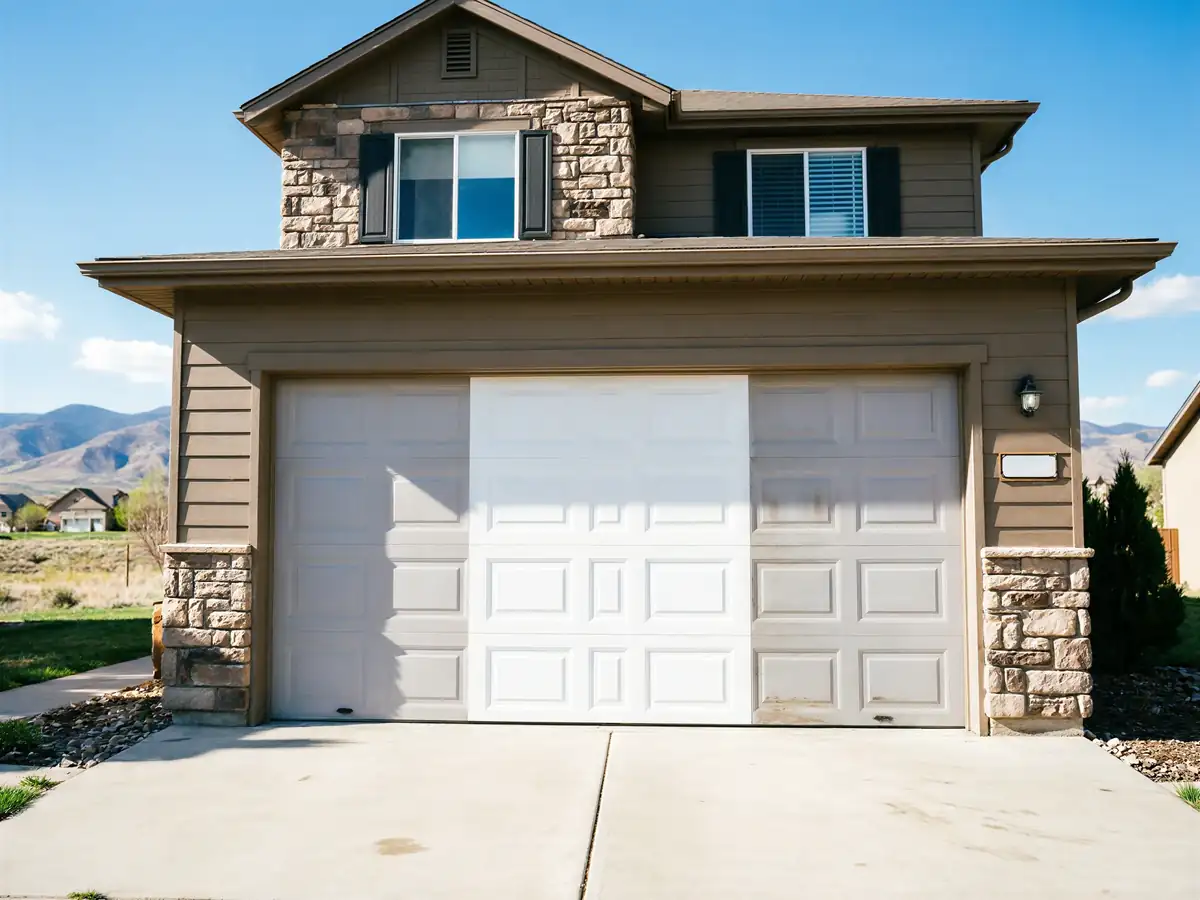
Most of the housing stock around Moses Lake went up between 1958 and 1987
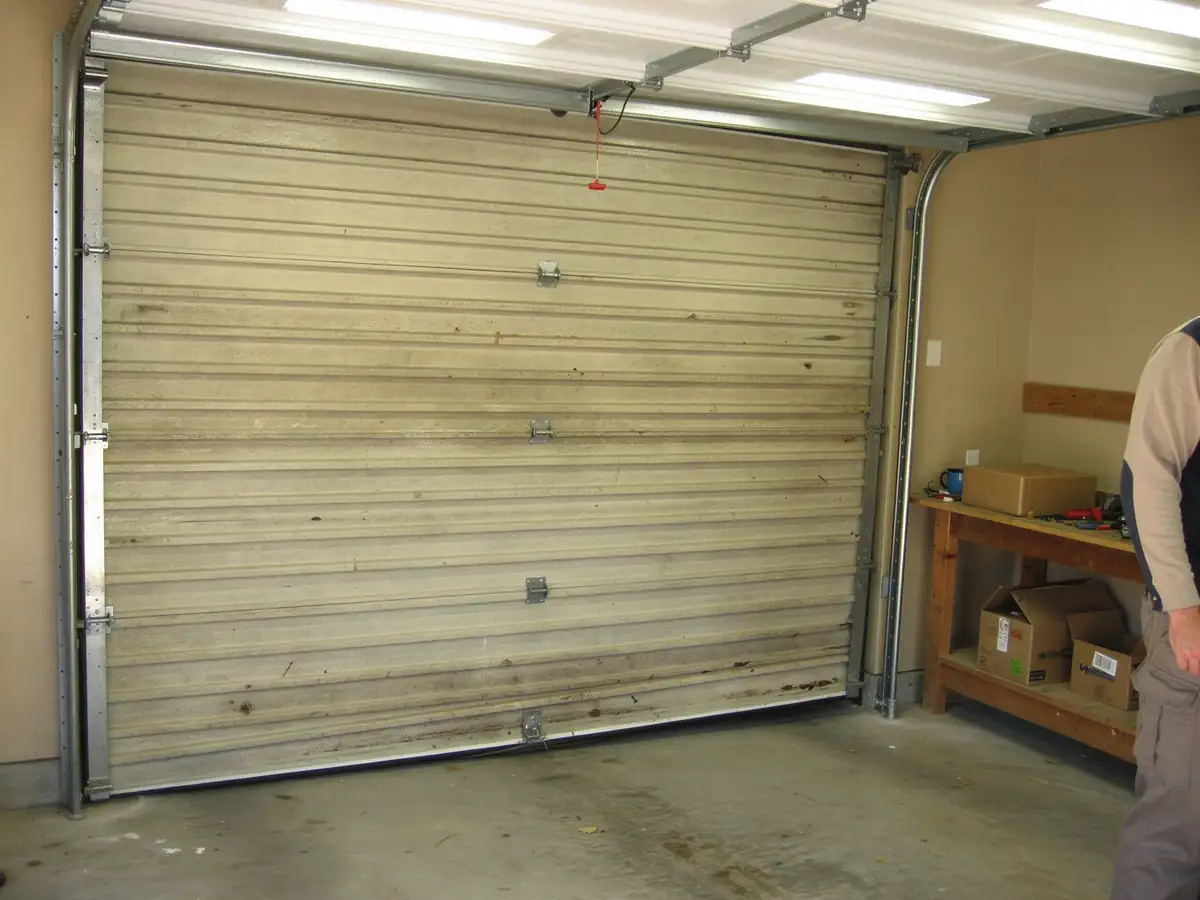
With the median home dating to 1969. That holds across the four areas we work in most - Cascade Valley, Moses Lake North, Warden, and Ephrata - where the bulk of what's on the ground is 1960s and '70s construction. A door installed when a house was built in 1969 has been through roughly five decades of Columbia Basin winters and summers, and the hardware shows it.
Across the service area there are 6,972 households
And 2,782 of those are owner-occupied houses. A lot of them still have the garage door that came with the house, or a replacement installed decades ago on the original track and spring setup. Median household income here is $56,084, which shapes the decisions people make about repair versus replacement - a lot of owners want the door fixed, not swapped out, as long as fixing it actually makes sense.
- 6,972 households
That's the backdrop for everything below
Older doors, original hardware, and a climate that doesn't go easy on either one.
When Waiting Is Fine
Not every noise or sticking point means a call today. A door that's a little loud going up, a roller that squeaks, a slight drag on one side - on a house built in the 1960s or '70s, that's wear, not failure. Lubricating the rollers and hinges and tightening loose hardware handles most of it, and that's a job most owners can do themselves with a ladder and an hour.
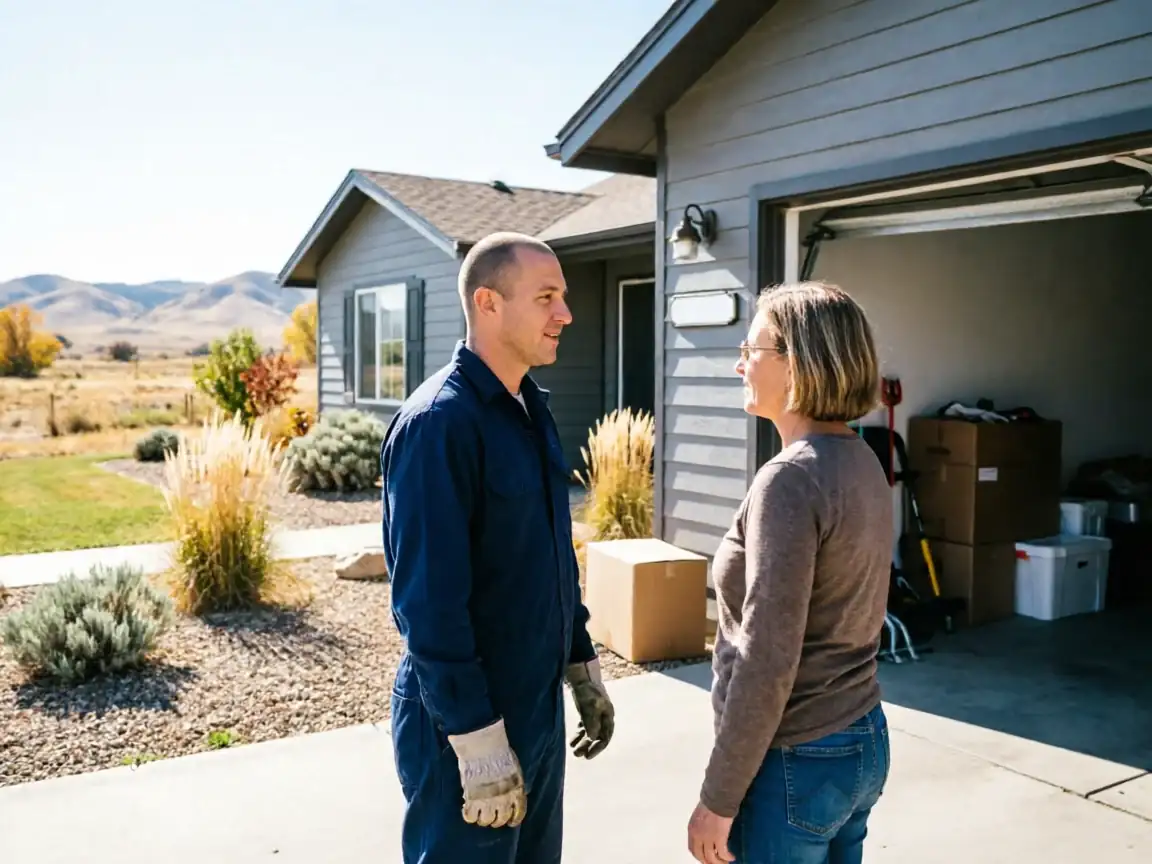
We'll say it plainly: if your door still opens and closes evenly on both sides and the spring looks intact, you don't need us yet. Given that median household income in the area sits around $56,084, we'd rather tell you to grease a hinge than sell you a service call for something that isn't broken. Save the call for when something actually changes - a cable looks frayed, the door comes off track, or it won't stay up on its own.
What the Weather Here Does to It
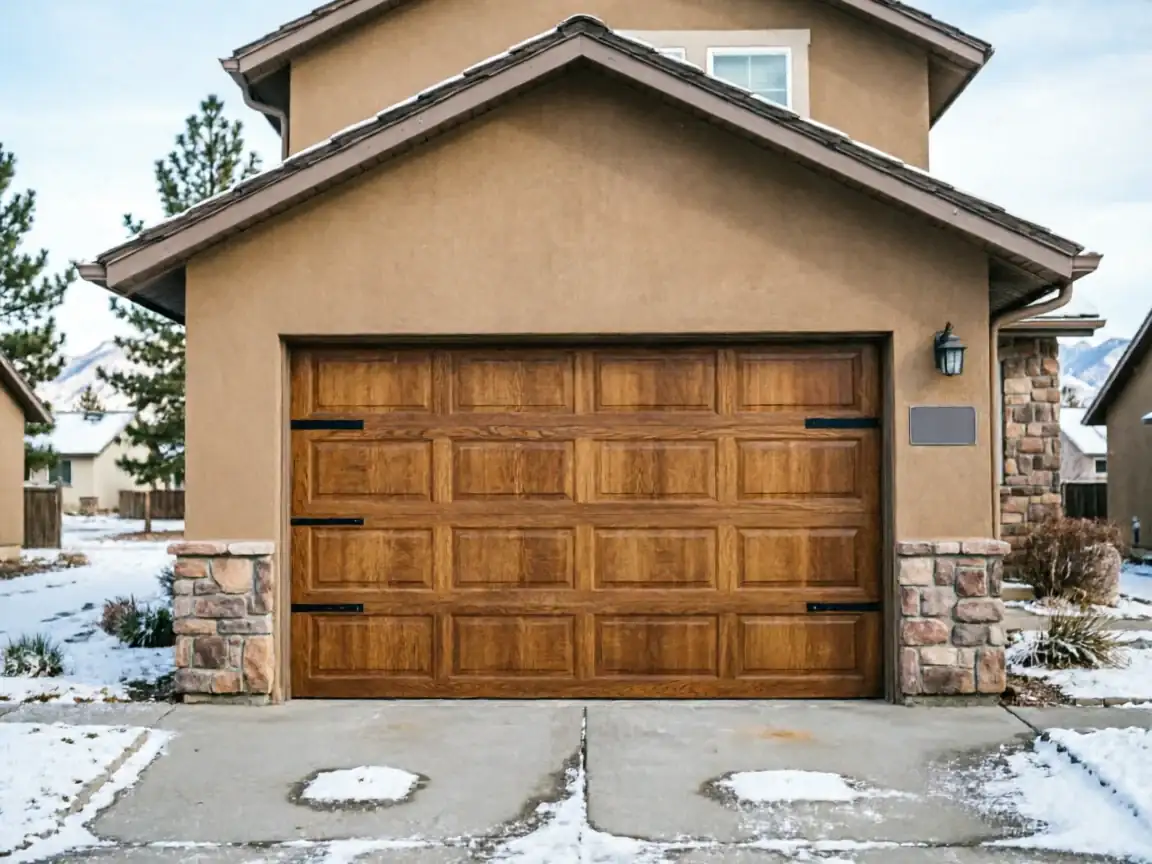
This part of the state sits in a cold-and-severe climate band, and that matters more on an older door than a new one. Steel torsion springs lose some tension as temperatures drop, and on a spring that's already 40 or 50 years old - original to a house built around 1969 - that seasonal contraction and expansion is cumulative. You'll notice it as a door that feels heavier to lift in January than it did in July, or an opener that strains and trips its limit switch in a cold snap.
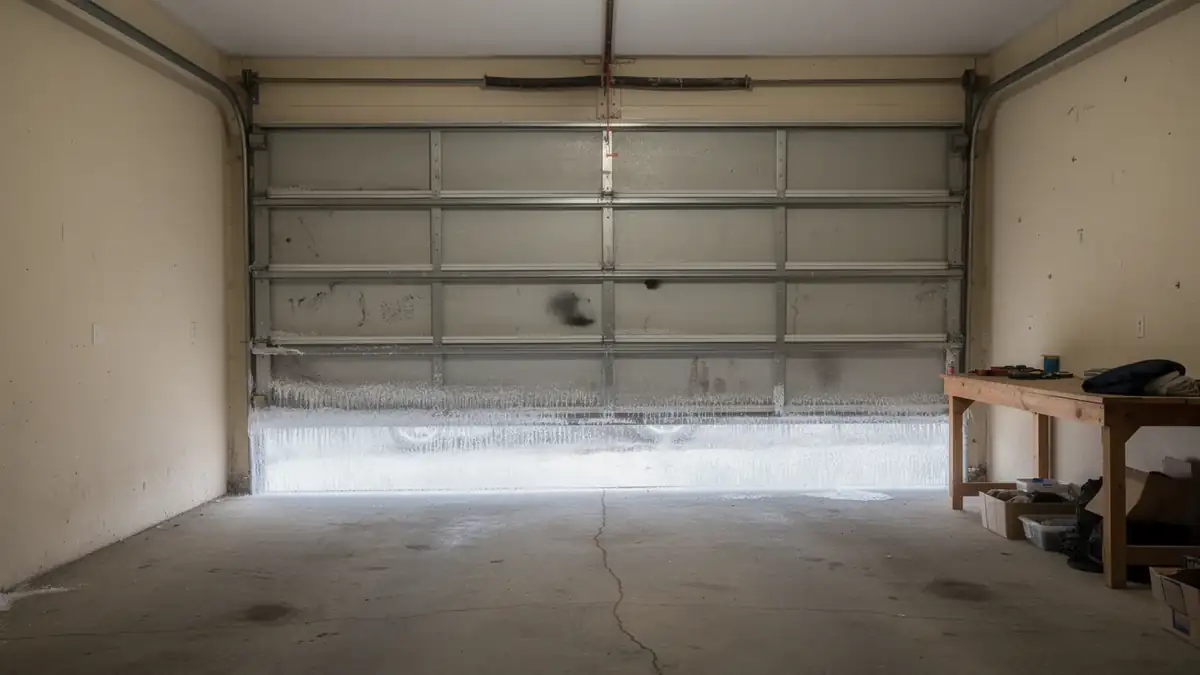
Weatherstripping on doors from that era was never built to the standard used today, so cold air gets past the bottom seal and around the panel edges more than it would on current hardware. Metal track can also contract enough in hard cold to throw a roller slightly out of alignment, which shows up as a grinding sound on the first cold morning of the season. None of this means the door is failing - it means it's doing exactly what a 50-year-old door does in a cold climate.
When It Stops Being a DIY Job
Some of what we see on these older doors goes past a home repair
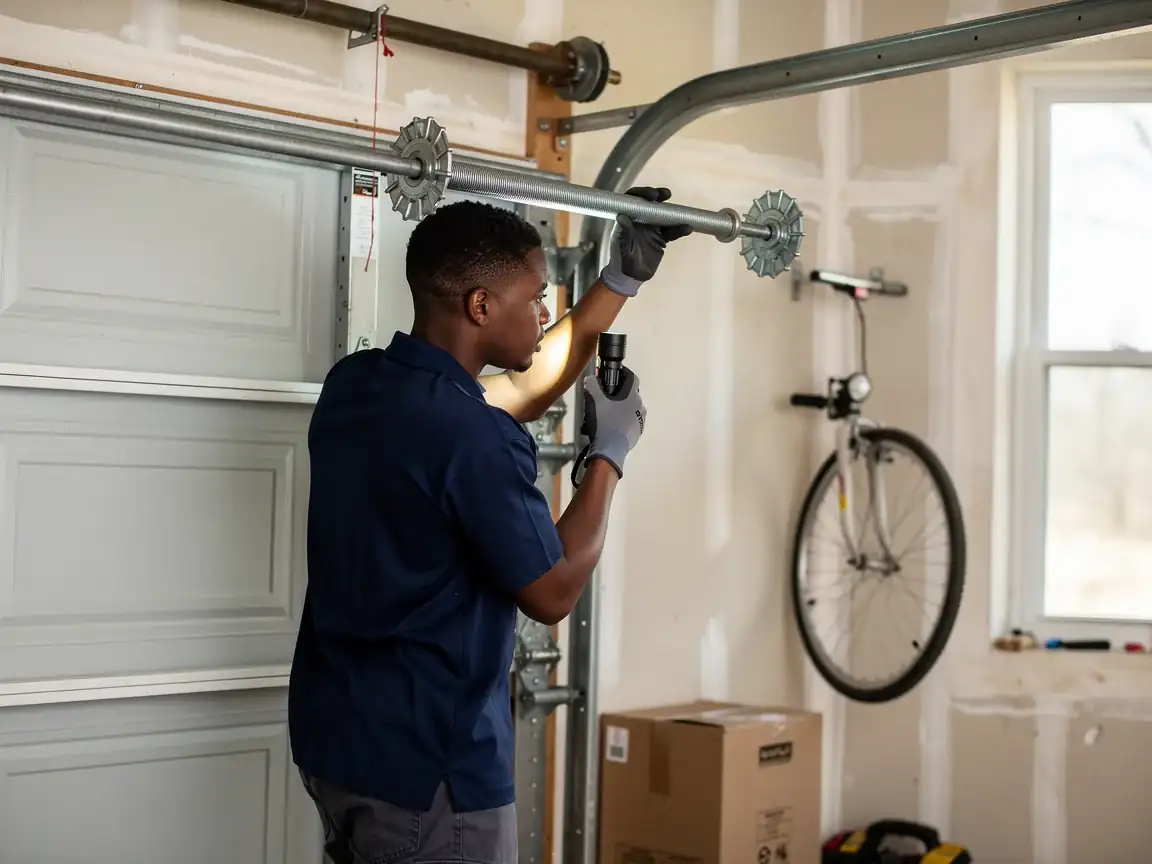
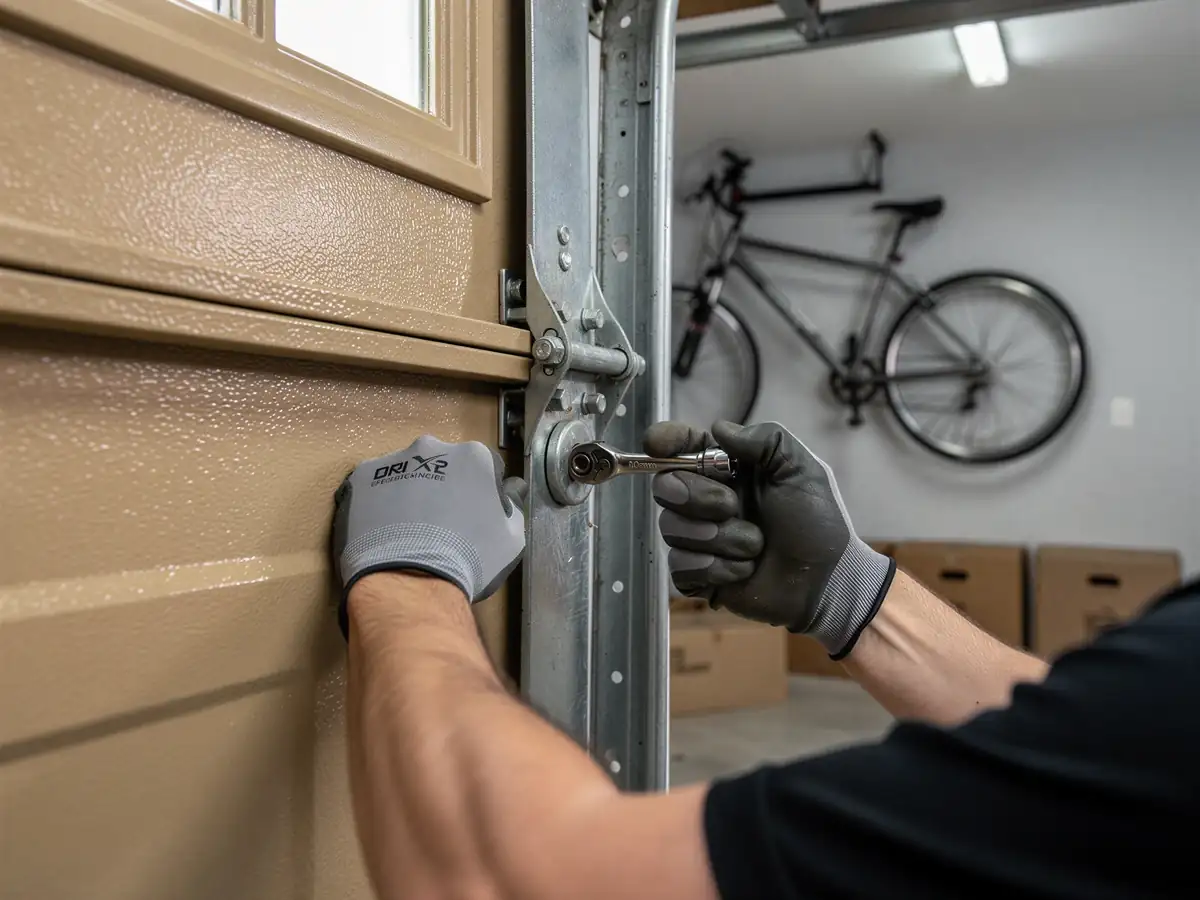
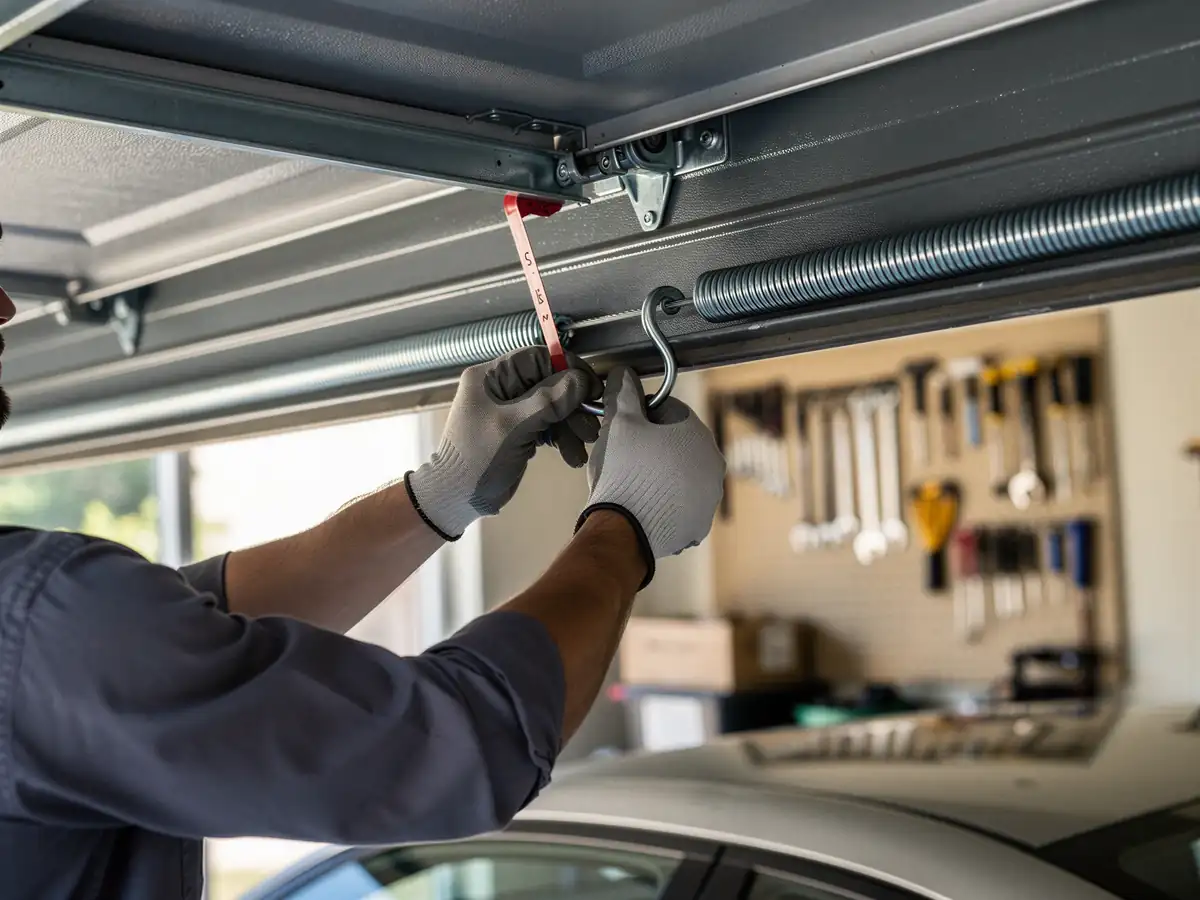
A torsion spring under tension is not something to loosen or wind yourself - on a door original to a house built before 1987, the spring has had decades to develop fatigue you can't see from the floor, and a spring that lets go under load can break fingers or worse. That's a call-us job, every time.
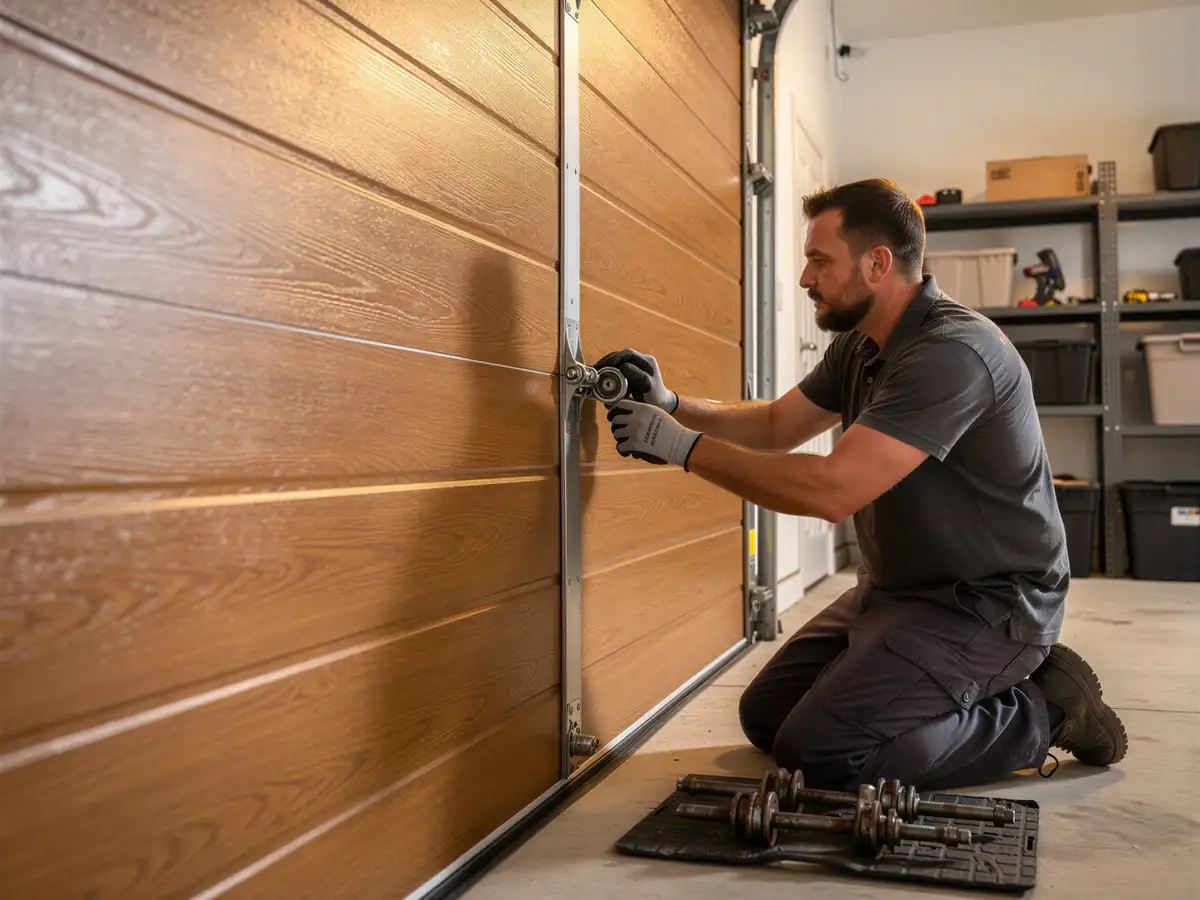
Track that's bent or pulled away from the frame, a cable that's frayed anywhere along its length
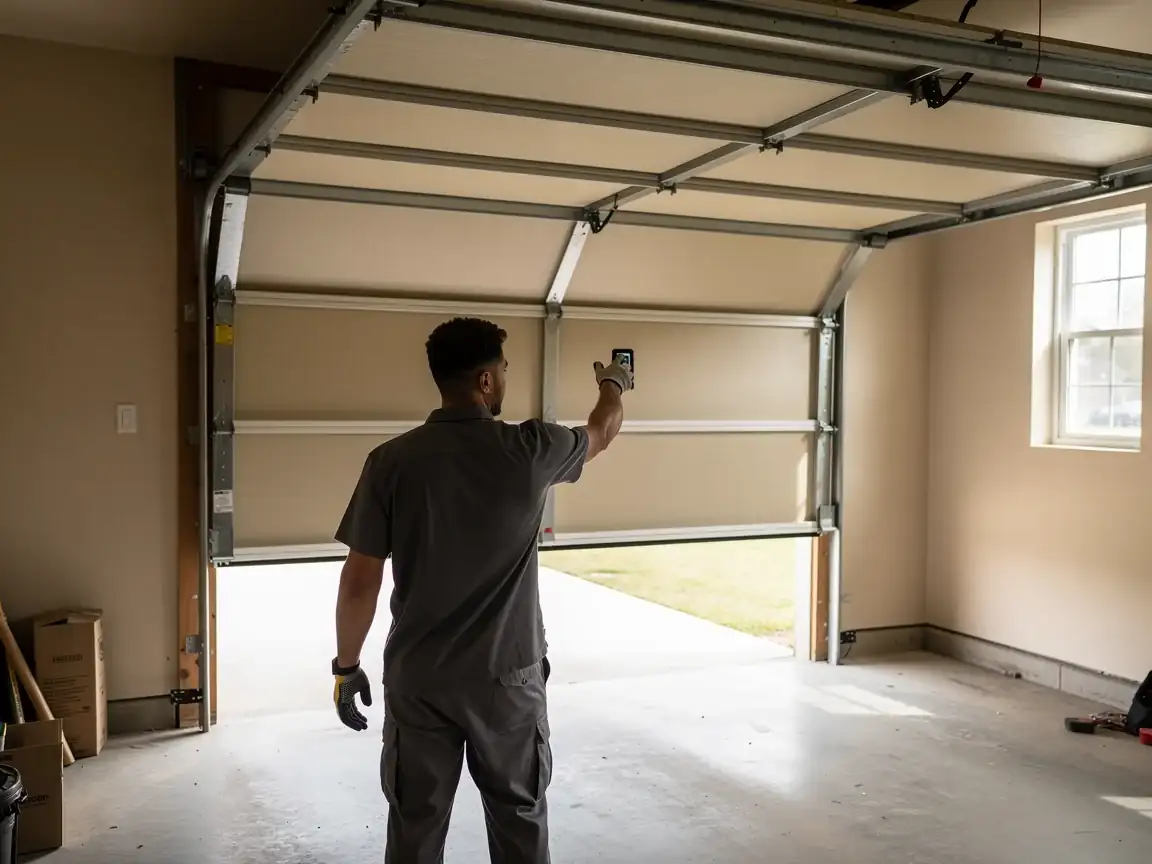
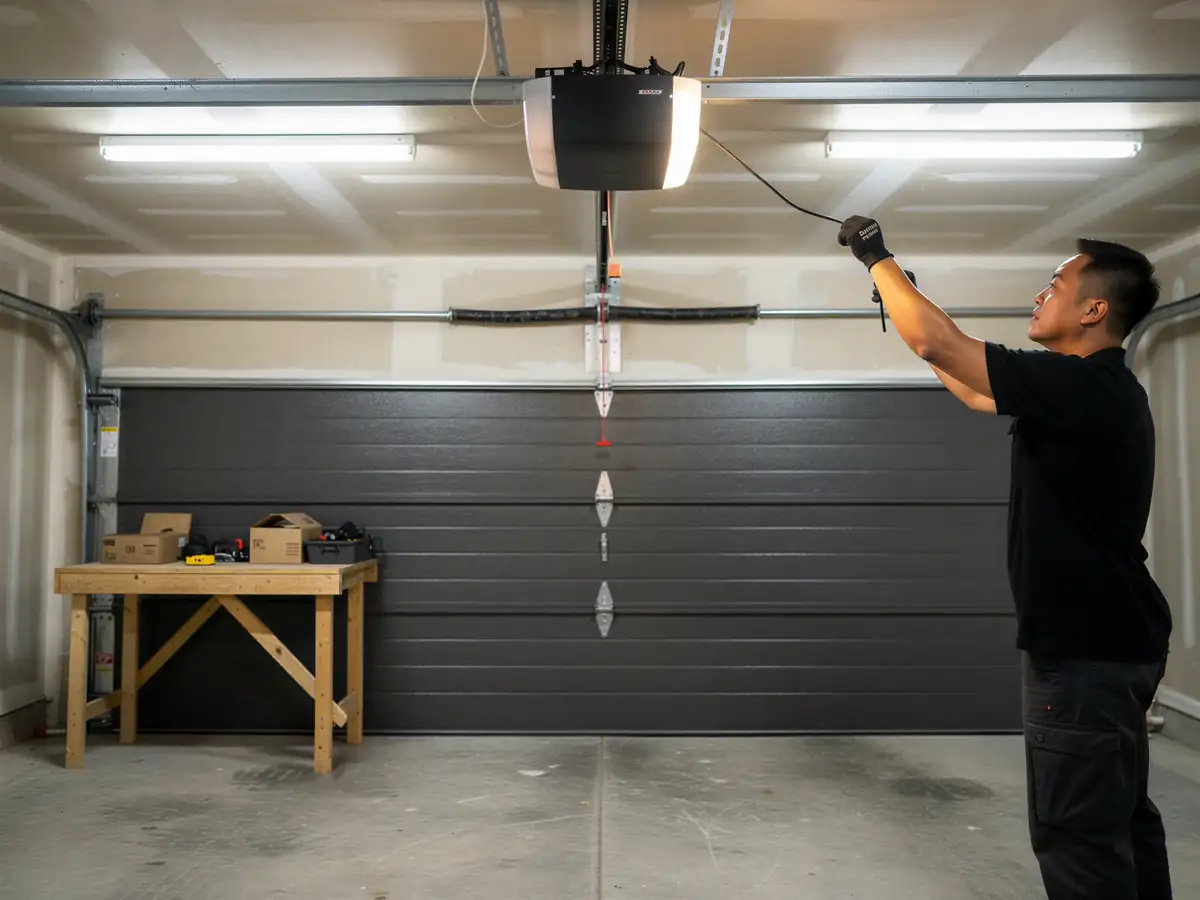
Or an opener that's reversing or refusing to engage - those are signs the hardware is past adjusting and into replacing. On a lot of the original installs still in service around Cascade Valley, Moses Lake North, Warden, and Ephrata, the honest answer is that repair buys a year or two and replacement is the better money, especially once a panel is cracked or the spring has already failed once. We'll tell you which situation you're in before we tell you what it costs.