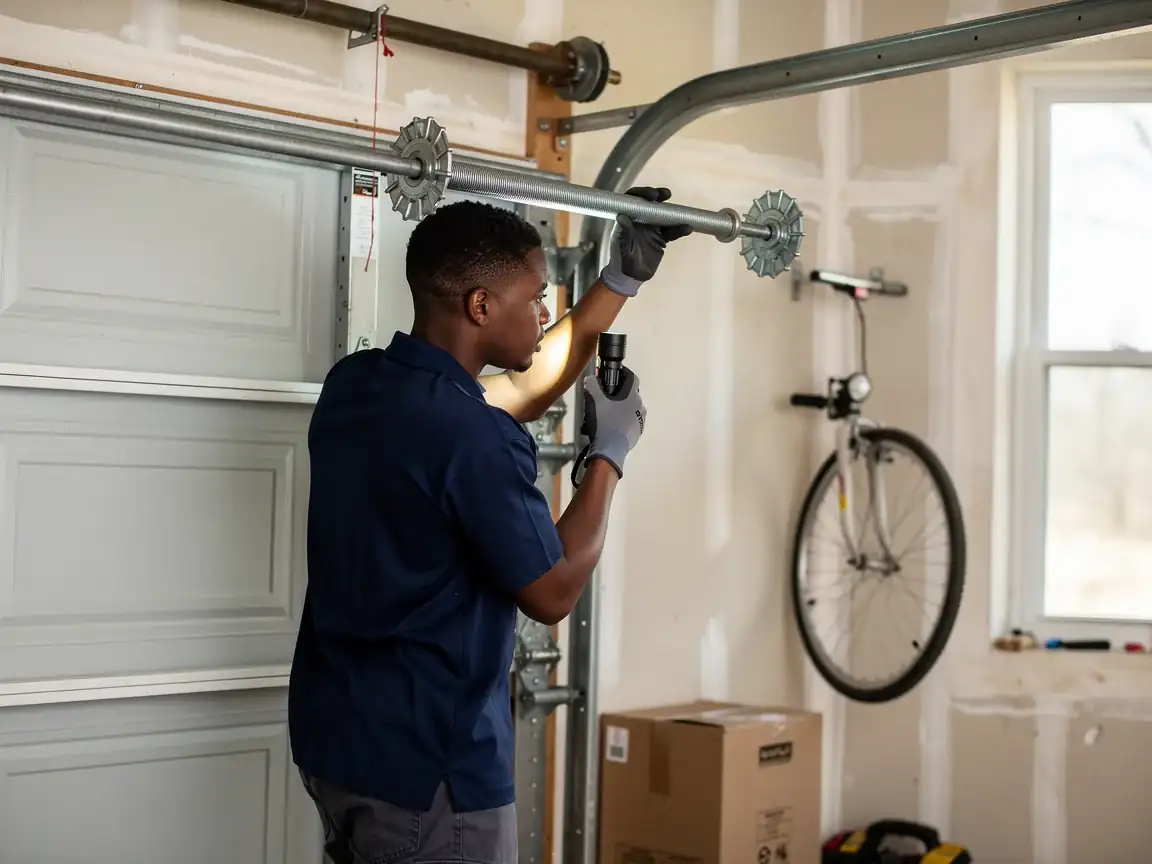
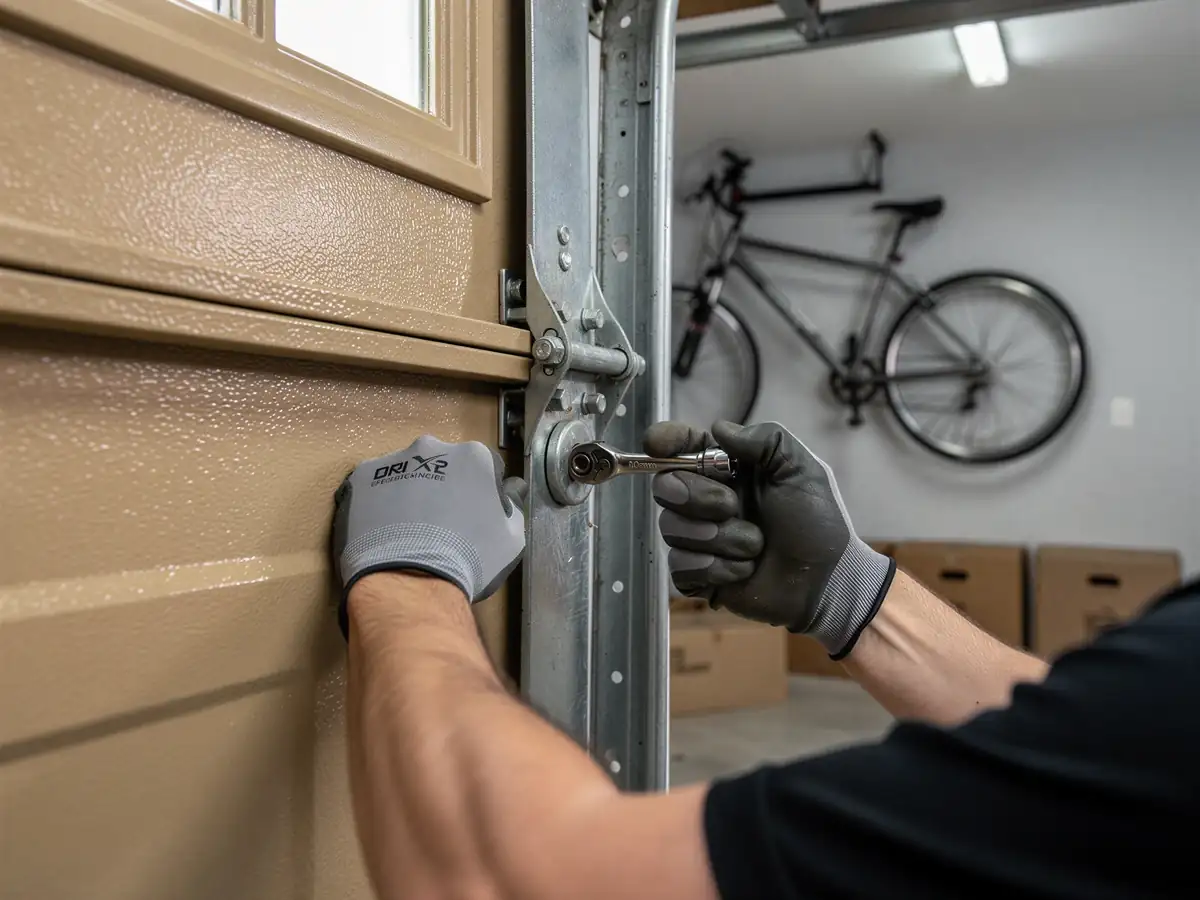
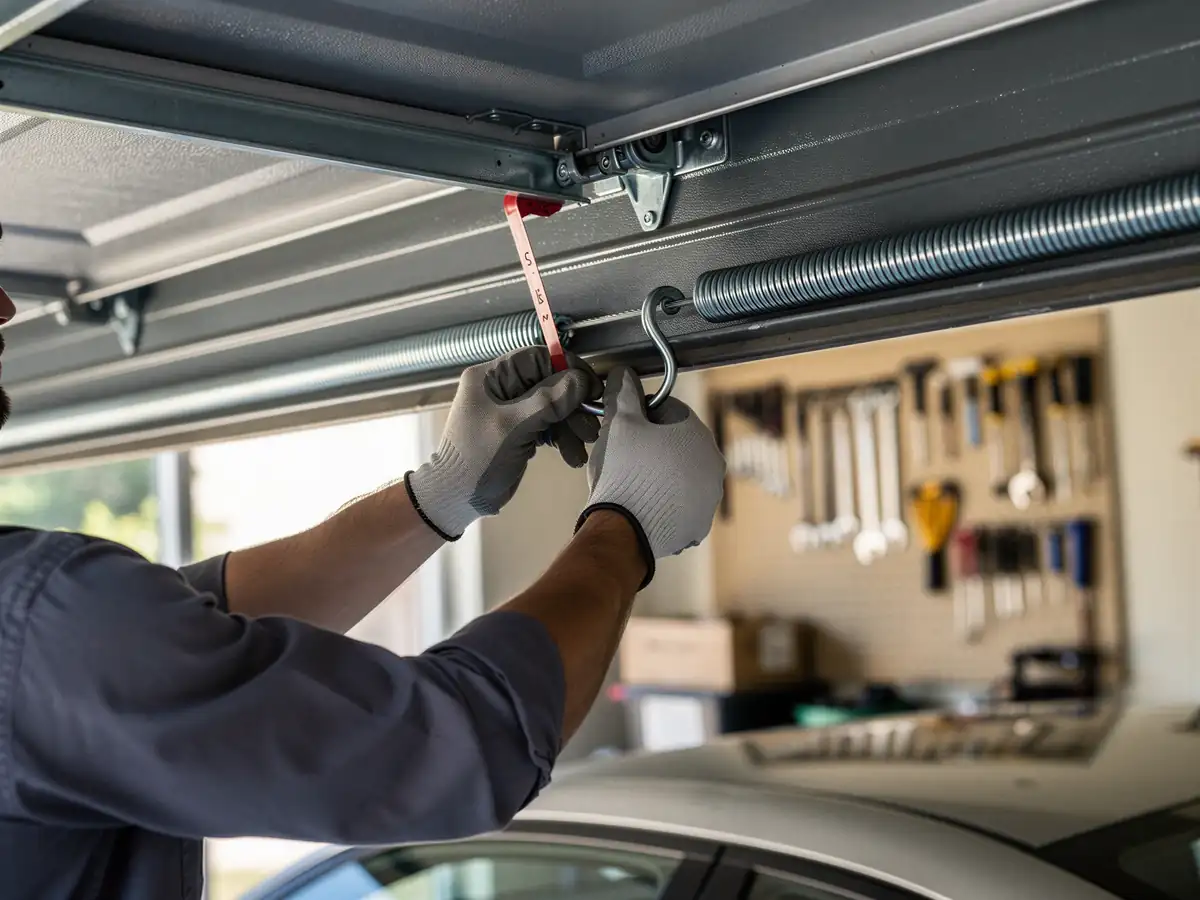
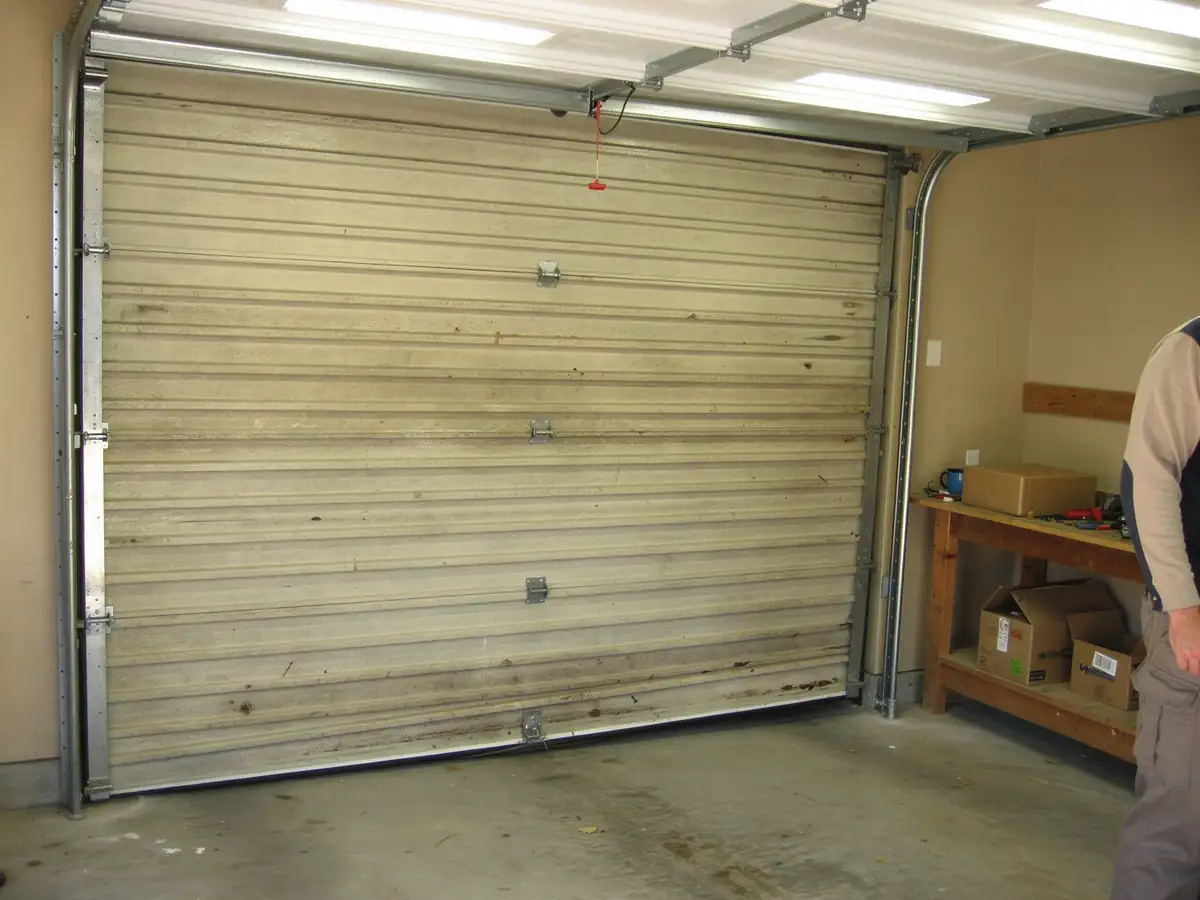
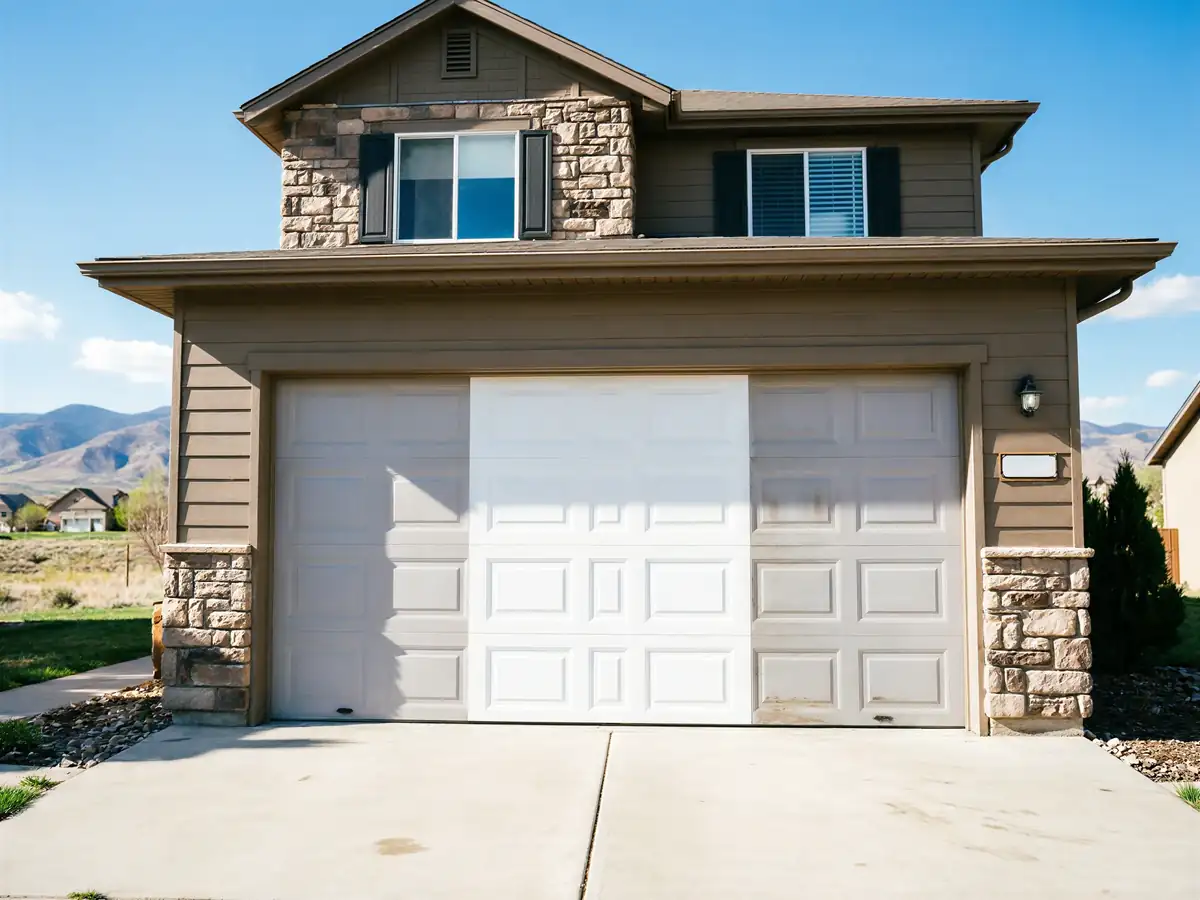
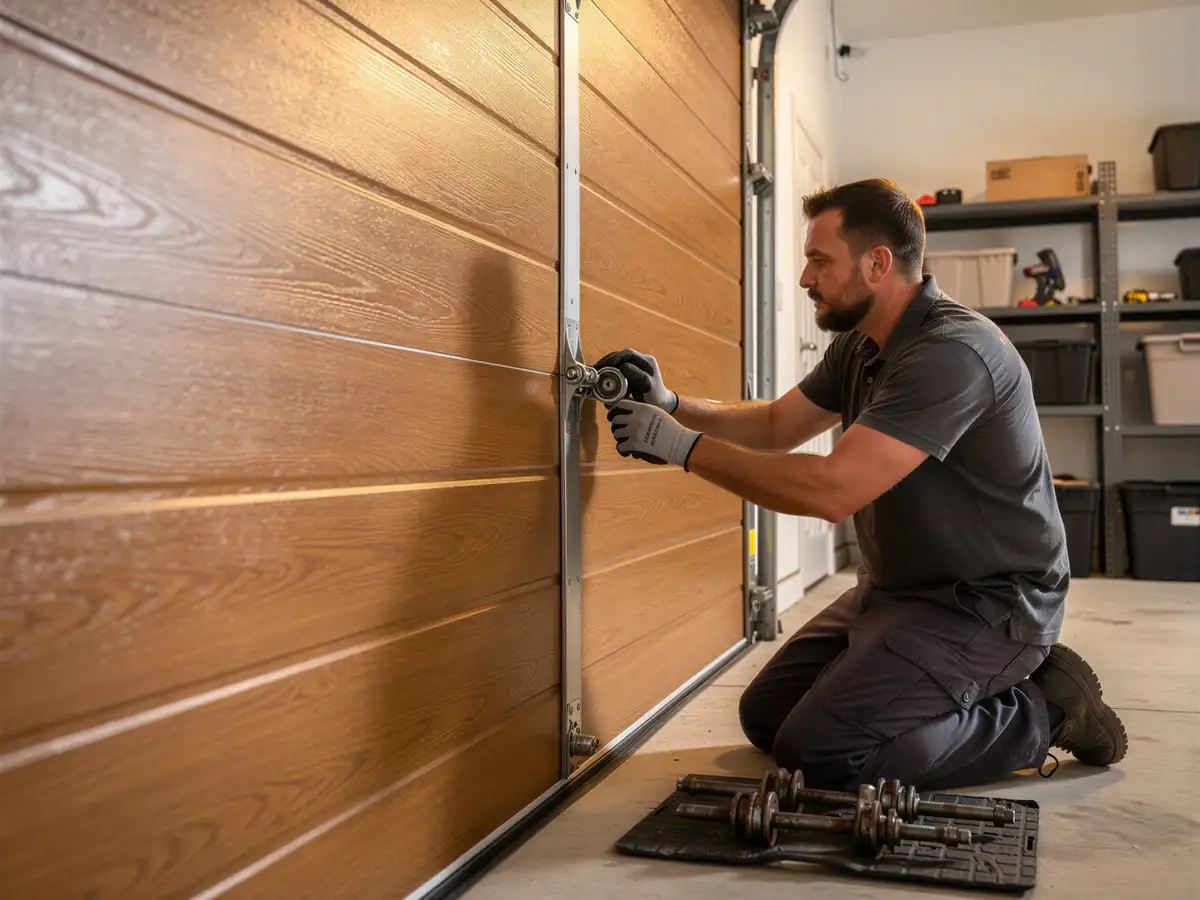
Most of the housing stock in this service area went up between 1958 and 1987, with the median build year landing around 1969. That's true across Cascade Valley, Moses Lake North, Warden, and Ephrata alike - four named areas, mostly the same era of construction. A service call here isn't a generic once-over. It's a check on hardware that's been through sixty years of Columbia Basin winters, usually without anyone touching the spring tension or the track alignment since the last owner. When we get a call, the first thing we do is look at what decade the door and opener actually belong to, because a 1969 torsion setup and a 2015 belt-drive opener need two completely different inspections. A real service call covers the spring (tension, wear, rust at the coil ends), the cables, the rollers and track alignment, the opener's force and travel settings, and the weatherstripping at the bottom panel. We also check the mounting hardware on the wall brackets, because on original installs from this era, lag screws loosen into framing that's shifted over decades of freeze-thaw. We tell you what's fine, what's wearing, and what's about to fail. We don't replace parts that don't need it.
When Waiting Is Fine
Not every noise or stiff spot means a call today. A door that's slightly louder than it used to be, or a roller that chirps on the way up, can usually wait a few weeks if the door still opens and closes square and the spring isn't visibly stretched or gapped. With 2,782 owner-occupied houses out of 6,972 households in this service area, a lot of these doors are on a maintenance cycle that's more reactive than scheduled, and that's fine for minor stuff. If the opener still reverses properly on obstruction and the door doesn't drift sideways in the track, a little roughness in the motion isn't an emergency. Lubricating the hinges and rollers yourself with a garage-door-specific lubricant (not WD-40, which washes out and attracts grit) often buys real time. What doesn't wait: a spring that's visibly separated, a cable that's frayed, or a door that's started to sag on one side. Those get worse fast, and on a door this age, a small ignored problem usually means a bigger bill once it fails.
What the Weather Here Does to It
This area sits in a severe cold climate band, and that changes what breaks and when. Torsion springs lose a measurable amount of tension as steel contracts in cold, so a spring that was marginal in October can snap in January without warning. On houses from the 1958-1987 era, the original springs were sized for the door weight at install, not for decades of lubricant breakdown and metal fatigue layered on top of hard winters. We see more spring failures here in the cold months than any other time of year, and it's not random - it's the combination of old hardware and temperature swings doing what they do to steel. Nylon rollers crack in the cold too, and the rubber bottom seal on an older door often hardens and stops sealing against the slab, which lets cold air and meltwater under the door. A service call during winter includes a cold-weather check: spring tension under load, roller condition, and seal contact, because all three fail together more often than people expect on a door this old.
When It Stops Being a DIY Job
A median household income of $56,084 across this service area means a lot of homeowners reasonably try to handle small stuff themselves first, and that's fine for lubrication, tightening visible hardware, or clearing track debris. It stops being a DIY job the moment a spring is involved. Torsion springs on doors from this era store enough force to break bones or worse if the winding bars slip, and we don't walk anyone through that over the phone. It's also not a DIY job when the door is original to a 1960s or '70s build and the track brackets have pulled away from aging wood framing - that's a structural fix, not a tightening job. Our honest limit: if a door's frame or opener parts are old enough that replacements are genuinely hard to source, we'll tell you straight that a full door swap makes more sense than chasing parts for something built before 1987. We'd rather say that upfront than bill you for a repair that won't hold.
How it works
From “it’s stuck” to “it’s fixed”
01
Tell us what’s wrong
Describe the symptom - won’t open, loud bang, opener runs but the door won’t move.
02
On-site diagnosis
A technician tests the door under power and by hand and finds what actually failed.
03
Clear, up-front plan
You get the fix that’s needed and what drives the cost - before any work starts.
04
Repaired & tested
The repair is done, the door is set true and tested, and the work area left clean.
Not sure which repair your door needs in Moses Lake, WA? Describe what it’s doing - every job starts with a diagnosis.
How often should I get my garage door serviced in Moses Lake?
There's no single schedule that fits every door, but given how much of the housing stock here dates to 1958-1987, we generally suggest a yearly check before winter, since cold is what stresses old springs and seals the hardest. If your opener or spring has never been serviced, that's a good place to start regardless of age.
Why do springs break more in winter here?
This area sits in a severe cold climate band, and torsion springs lose tension as steel contracts in cold. A spring that was borderline in fall can snap under load once temperatures drop, especially on older doors where the spring has already lost some strength to age and lubricant breakdown.
Is it worth repairing an older door instead of replacing it?
Depends on what's failing. A spring, cable, or roller swap is almost always worth it. If the track brackets have pulled from aging framing, or the door and opener are both original to a 1960s or '70s build, we'll often recommend replacement instead of chasing parts for hardware that age.
Do you serve areas outside Moses Lake proper?
Yes - we cover Cascade Valley, Moses Lake North, Warden, and Ephrata, which run from about 3 to 18 miles out. Housing stock across those areas is largely the same 1960s-70s era, so the same checks apply no matter which of them you're in.
Ready to get your garage door sorted?
Tell us what it’s doing and where you are in Moses Lake - we’ll take it from there.