What You Are Seeing
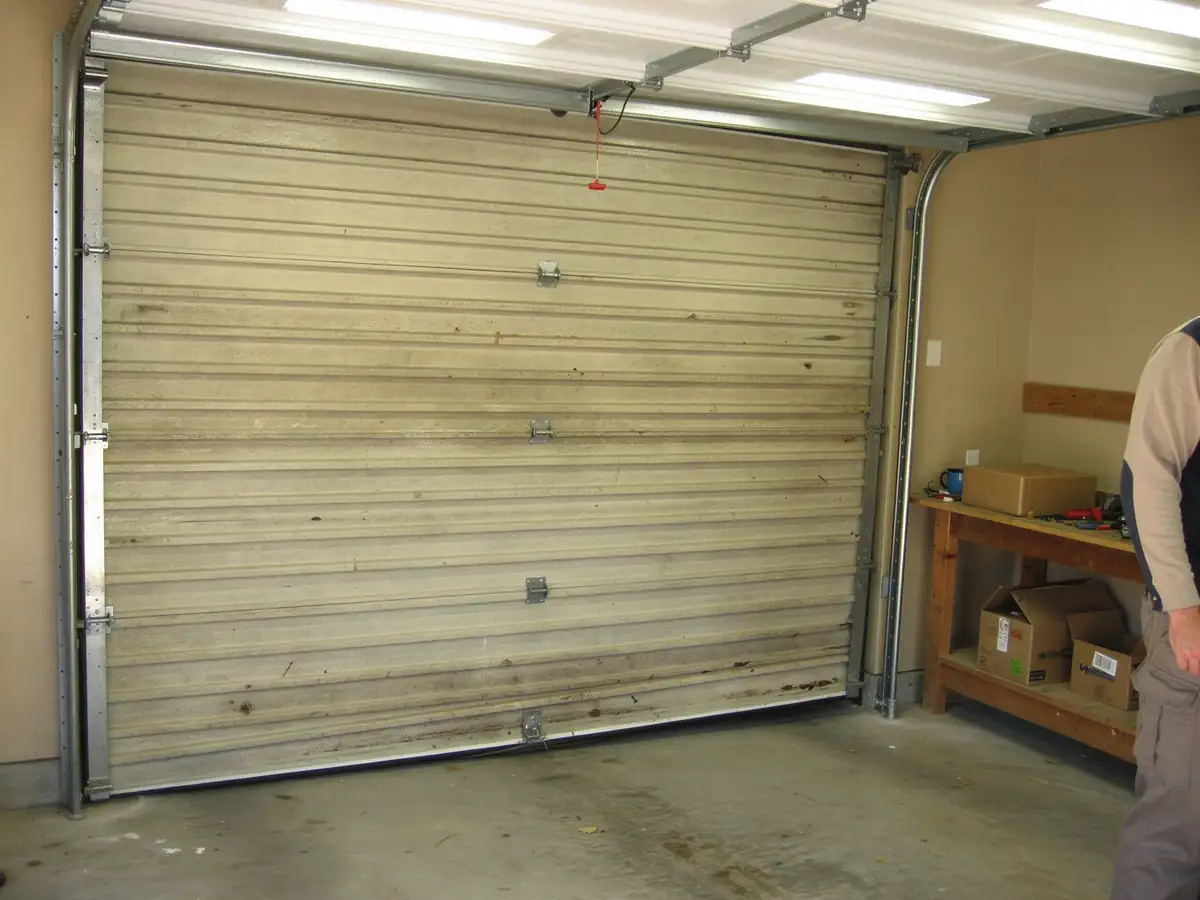
If your door is sitting crooked in the opening, hanging at an angle, or came to a dead stop halfway up with a loud bang beforehand
It's almost certainly a roller that jumped the track. Sometimes one side comes free and the door racks sideways. Sometimes the whole panel pops loose and the door won't move at all without grinding metal on metal.
The track itself is rarely the real problem
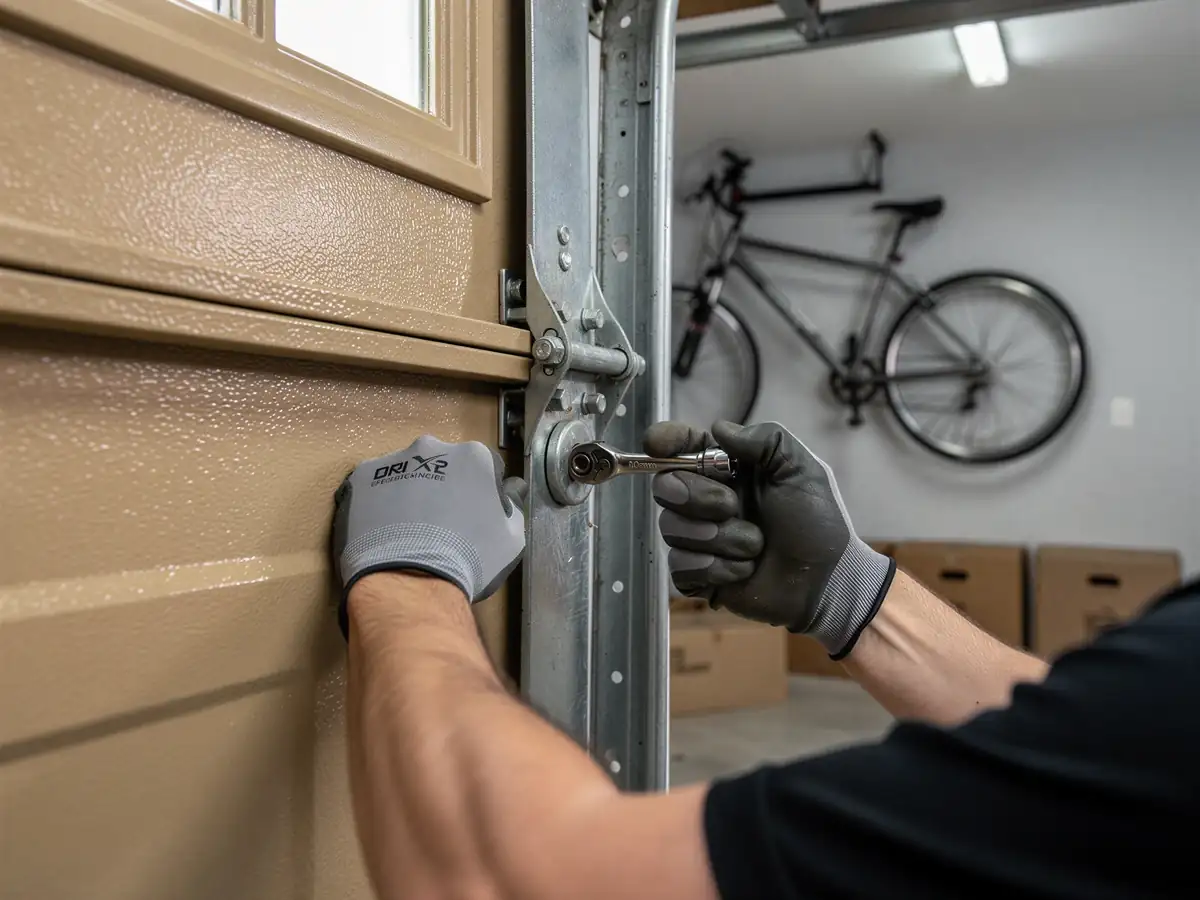
It's a guide rail, not a load-bearing part, so when a door jumps it, something upstream pushed it there - a broken cable, a snapped spring throwing the weight unevenly, a bent track section, or hardware that's worked loose over years of use. Pushing the door back onto the track without finding that cause just sets up the next jump.
Across the Moses Lake service area
Cascade Valley, Moses Lake North, Warden, and Ephrata - we see this fault constantly, and it tracks closely with the age of the house it's attached to. A door that jumps once usually jumps again within a season if nobody addresses the root cause.
What Causes It Around Here
Housing in this area mostly went up between 1958 and 1987, with the median build year sitting around 1969. That means a lot of garage door hardware out there is original or close to it - galvanized track with decades of surface rust, rollers that were never nylon to begin with, and brackets that have loosened a hair at a time since the Nixon administration.
Add a severe cold climate band and you get metal that contracts hard every winter and expands every summer. That cycle works bolts loose at the track brackets faster than it would in a mild climate. A track that's a quarter-inch off plumb doesn't matter much in July, but in a hard freeze, with the door's full weight swinging through a cold, stiff opener, that quarter-inch is often enough for a roller to walk right off the rail.
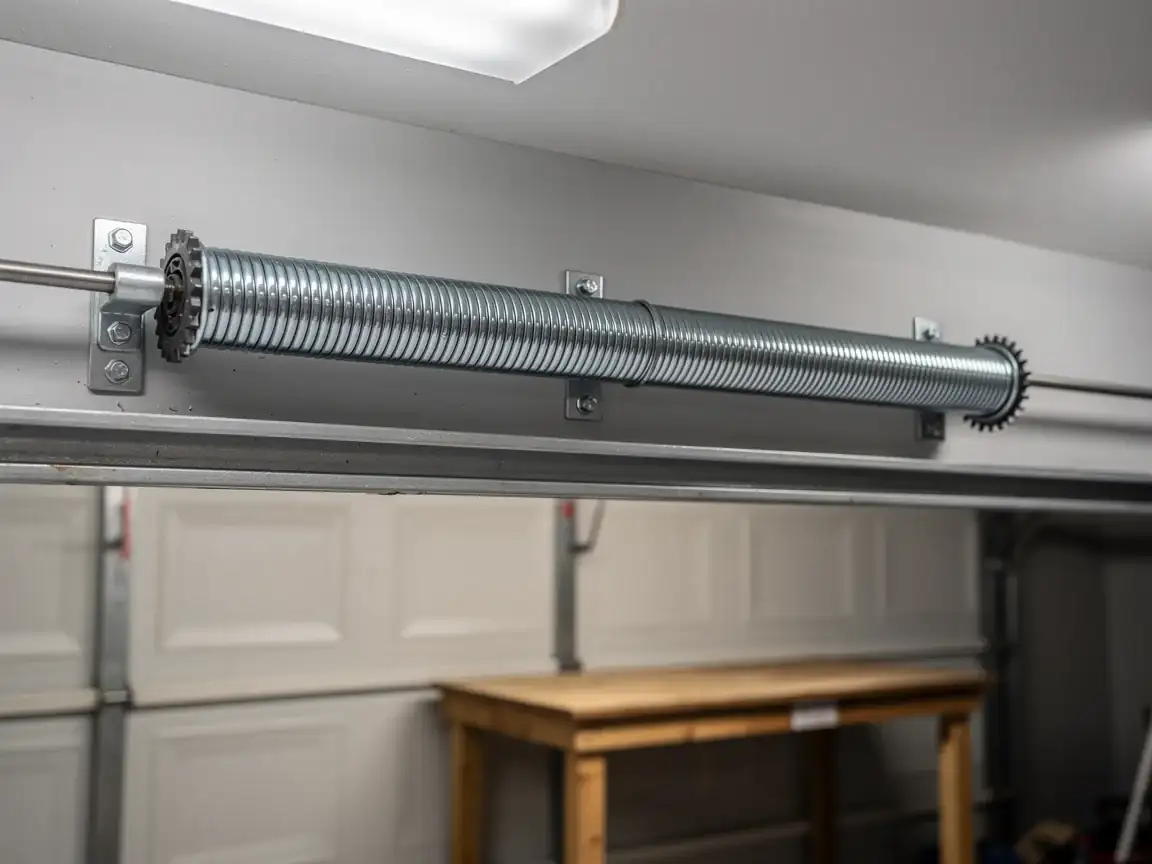
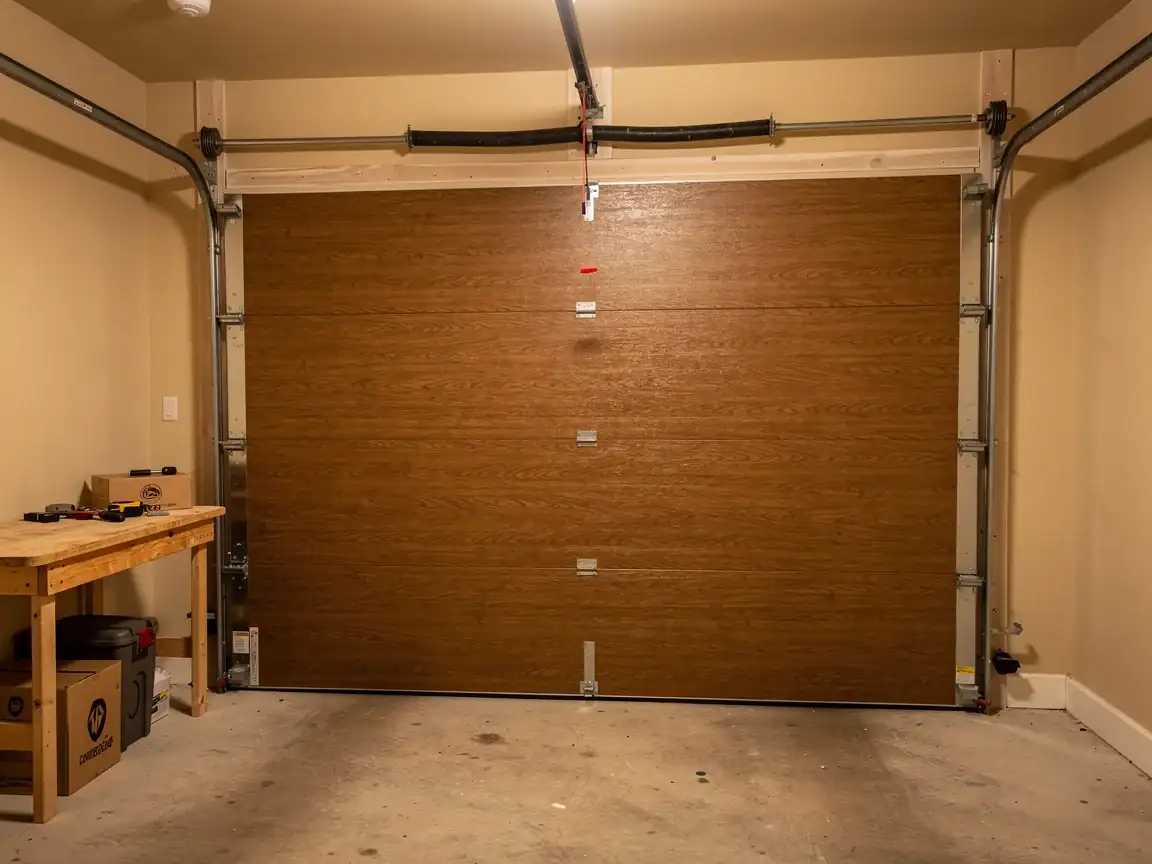
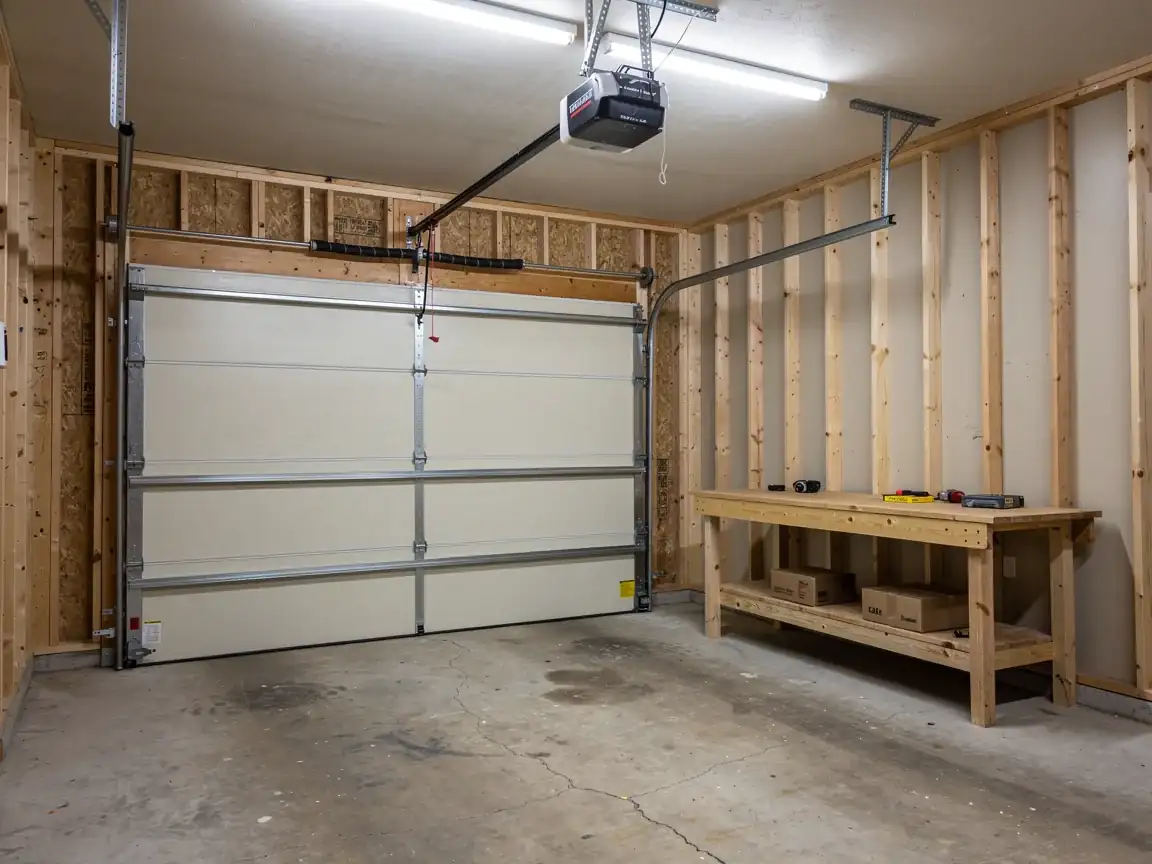
We also see it after a spring failure. An unbalanced door - one spring working, one gone - puts twisting force on the track that it was never built to handle, and that's frequently what sends it off the rail on older torsion setups common in this housing stock.
Parts We Carry
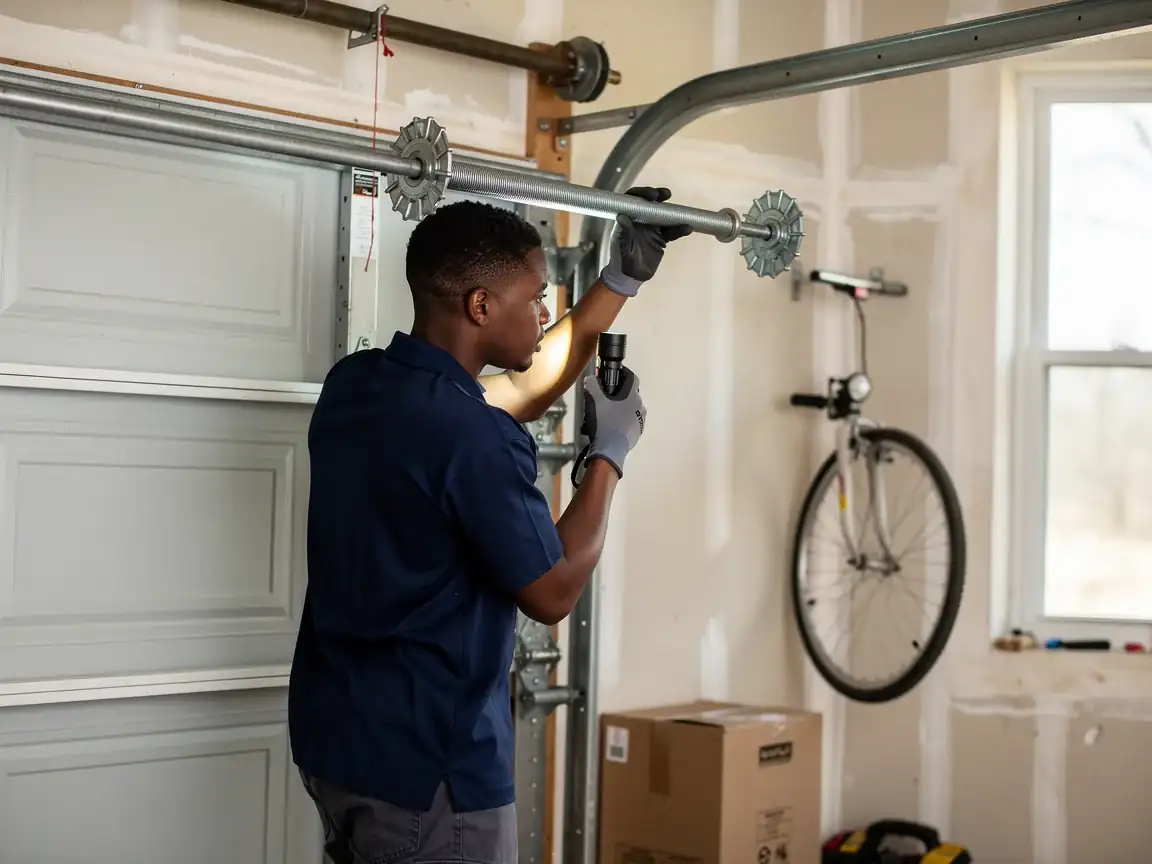
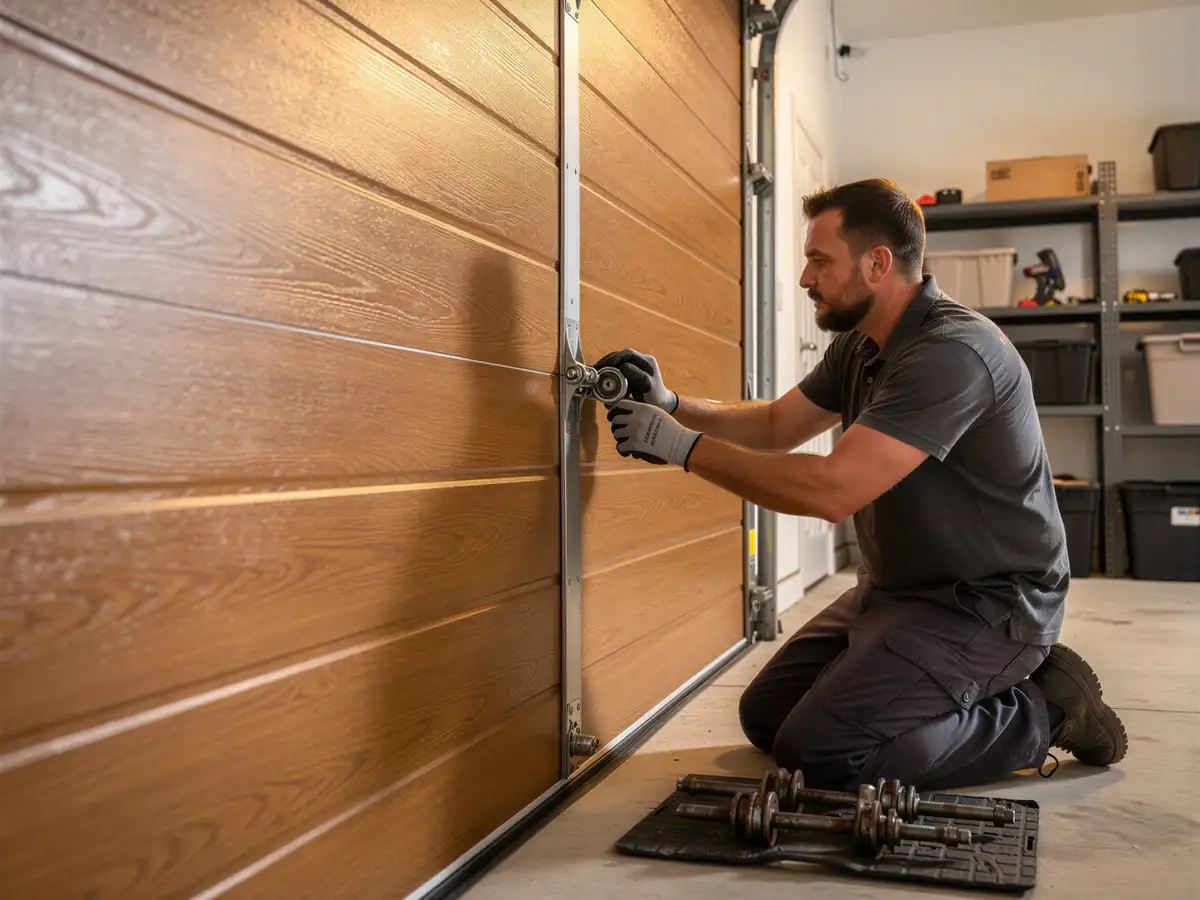
We carry replacement track sections, rollers (steel and nylon), hinges, and the brackets that tie the track to the framing, because on houses from the 1960s and 70s that hardware is usually what's actually worn out, not just knocked loose. We also stock torsion springs and cable, since a jumped track is so often a symptom of a spring or cable failure rather than the cause.
What we don't carry on the truck: obsolete one-piece hardware kits for doors that predate sectional panel systems. If your house still has an older one-piece door, parts for it can mean a special order, and we'll tell you that up front rather than make you wait at the curb while we pretend otherwise.
For most sectional doors common across this service area, we can replace a bent track or worn rollers in a single visit. If the track is bent badly enough - usually from the door being forced while off the rail - we'll recommend replacing the section instead of trying to hammer it straight, because a straightened track rarely holds true for long.
What You Pay
What a job costs depends on what actually failed
A roller swap is a different job than a bent track section, which is a different job again than a track-and-spring replacement after a cable snapped. We don't quote a flat number over the phone before we've looked at the door, because guessing wrong either way isn't fair to you.
What we can tell you
Households across this service area have a median income of $56,084, and we price jobs with that in mind rather than treating every repair like a full system replacement. If a track repair will hold and a full door replacement won't buy you much more, we'll say so. If the door is old enough and far enough gone that repeated track jumps are a symptom of a dying system, we'll say that too, instead of patching it a third time.
- $56,084 median household income